
Read the short voyage account ↗
ORIGINAL LOG · PAGE 1
"All Islands of the UK and Ireland to Port"
Jason lawrence
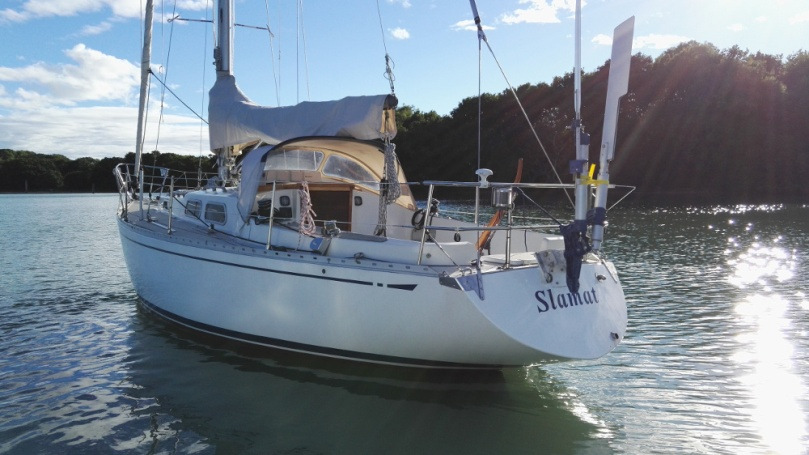
Slamat, a Sparkman and Stevens Sagitta 35
A boat for a mission or a mission for a boat?
We had completed a big adventure on a bigger boat but now needed something smaller and more manageable for home waters. In July 2016 I travelled to Breskens to pick up Slamat, a Sparkman and Stevens Sagitta 35, and start a new chapter in our sailing adventures.
With continental cruising complete Slamat came ashore for a refit and by late May 2017 she was back in the water ready for action. Having sailed through the islands it seemed logical to sail around the islands we call home. A "round Britain and Ireland" sounded good, "all the islands of the Uk and Ireland to Port" sounded better . Only later did I realised Rockall would be part of the plan.
Over the winter I read Roving Commission logs, in particular the West coast of Ireland, and bought books on sailing around the UK. I enjoyed fireside reading and thinking of the route and what sort of trip to expect. It seemed the jury was out on which way to approach the route. I knew I would want to be offshore, preferring not to stop before I had miles under the keel and found the rhythm of offshore sailing which I so enjoy. We planned to cruise the south west of Ireland as a family, so definitely wanted to have the bulk of the trip astern before that. In addition I would prefer to be chasing tide up the channel with longer spells of fair than foul.
East it would be!
ORIGINAL LOG · PAGE 2
With the weather improving departure set for Saturday 10th June. Friday came and after a last dinner at home Amanda and the boys took me down to the Folly with a cool bag and my oillies. Farewell on the dockside and a water bus up the Medina saw me on board Slamat and reality started to bite. In the still of the evening, listening to Run DMC playing at the festival up river, I considered the moment and what I was setting out to do. I settled down to a good nights sleep, thoughtful about the coming day and how Slamat would perform post refit.
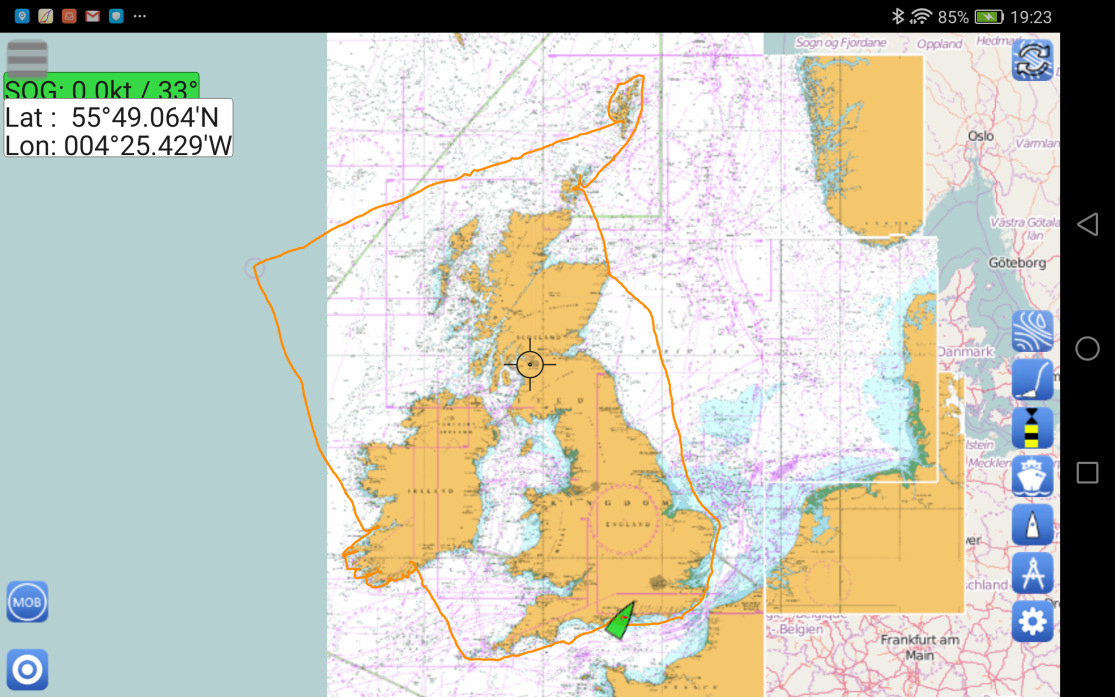
I woke excited. Engine on, kettle on, thermos full, Lavazza in mug, time to go. At 0230 I slipped lines, motored gently through a sleeping Cowes and turned left at the Squadron. In thinking about the route, I wanted to have the Isle of Wight to port at the start of the trip, so hoisted the main with a precautionary reef and motored west down the Solent.
By 0700 I was abeam St Cats with SW12, fair tide and perfect conditions. The new 95% Jib was pulling well, but with easing conditions and clocking wind I launched the reacher, my solution for lighter winds aft abeam. The tide turned against and after a ships lunch in the sun (bread, cheese, pate) I caught an hours sleep. I had organised Slamat for single handed sailing and, as part of the refit, fitted an AIS unit. Not only does it transmit my position, it relays all GPS, AIS and instrument data wirelessly to my phone and tablet. I can set up different profiles so that alarms sound if any AIS signal enters the profile. However it won't wake me up for non AIS obstructions such as other yachts, buoys and sneaky fishing boats.
ORIGINAL LOG · PAGE 3
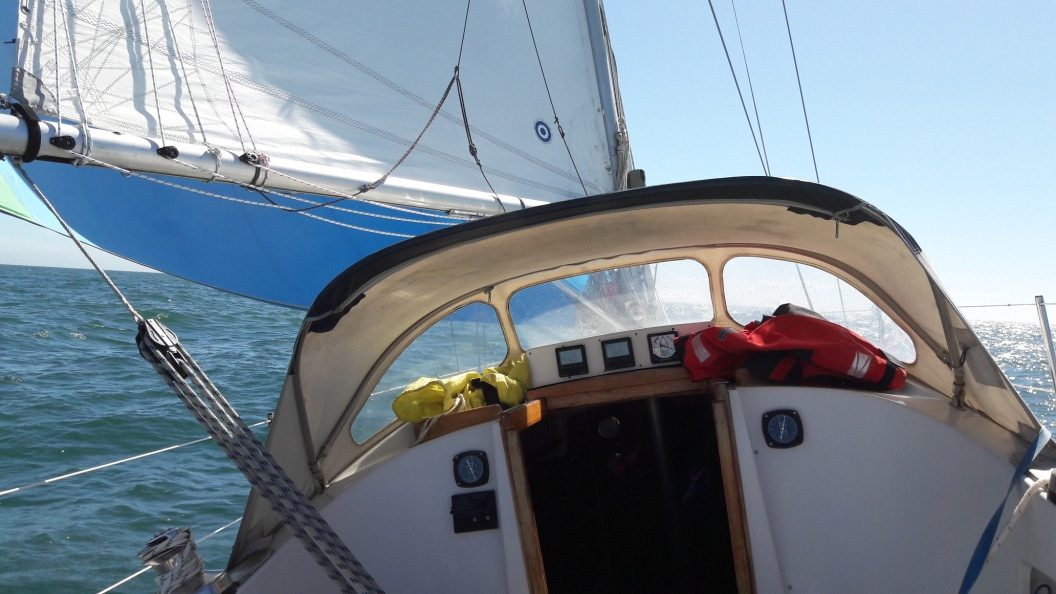
Off to Dover
Dinner in the cockpit, sunset off Dungeness; all was well and I felt good after a beautiful day at sea. Once past Dover things would become more testing. With shallow water, compressing tidal flows, difficult navigation and shipping in closer proximity I would need to be alert and on the ball. With few opportunities to sleep I had been worried about this next 100 miles, up past East Anglia and into the deeper north sea proper. Although the tide and wind conditions were perfect I opted for rest and with Dover approaching, remembered the outer harbour offered a good anchorage.
Nearing the harbour I called Dover Port Control. I was a little shocked when they said that the anchorage was closed. This was a serious letdown as I was already thinking about the comforts of my sleeping bag! Thanking them for the information I motored on, resigned to taking on the east coast tired. Five minutes later they contacted me to say, if interested, they could escort me to a suitable spot. What a relief! After crossing a violent cross tide I made the harbour entrance and was lead by port authority launch to a dark corner of the harbour, 7m mud, perfect. Daily Run 1 (DR1) 143nm
Waking refreshed all was looking good with SW12-20 forecast . At 1000 I headed out of the harbour, slack water, ready for a busy day on the East coast. The wind was as predicted and by 1230 had increased to 18kts. With 2 reefs in we were past the Goodwin Sands and I prepared a ships lunch in quite rolly conditions. The wind was getting up as we made our way, reaching and running, through the sand bars and wind farms. We had crossed the Thames estuary and were making our way up the coast of East Anglia. Conditions were changing. It was rough south, with talk of F6 and F7, and ahead was looking tough with talk of 25+kts on the nose as I made up past the Wash in 12 hours or so. After that it looked like great conditions up to Fair Isle. I considered pulling up in Lowestoft, but knew by breaking the rhythm I would fall into a poor slot. I just needed to get through the next 24hrs and all would be well. The barometer started dropping. At sundown the wind
ORIGINAL LOG · PAGE 4
came in. Almost in a moment I put 2 further reefs in with half jib. At 0120, 12th June I logged my furthest East position of 001.56.25E, and started to put more west in the course.
"0300 hardened up, close hauled with 3 reefs in and half jib, making 310 degrees."
My wind indicator was reading 16kts true, but i was starting to think this was seriously wrong. I was concerned; having taken weight out of Slamat, had I made her too tender? What would I do when we got 25 or 35Kts? I had little reef remaining. Looking out to sea the wind was at least 25kts, something was amiss with the wind speed reading. 0320 predawn and hard pressed. We had to make certain gates to windward, around Haisborough sands and through wind farms etc, so it was tough going. There was plenty of shipping about adding to the action and with the tide against it was slow progress to windward in rough seas.
Slamat was going well but taking a lot of water over her decks. I was aware that there were a few window leaks, one directly onto the chart table of course. I marked them up for later attention. 0600 Another wind farm ahead on Sheringham shoal and the seas were really quite lumpy, steep, turbulent and sharp but without that deep oceanic power. I was looking forward to deeper water and a more settled sea state.
"0900 massive broadside, got to be F7 now, 3 reefs and tiny jib, 3m seas and well healed over, shipping about and not very pleasant."
That was about the worst of it, by lunchtime I was shaking reefs and had a full jib. I busied myself mending a few bits. The tool drawer had launched across the cabin and smashed, the tiller nuts needed attention and Sven, the wind vane, needed re rigging. After a general tidy up I had a rather rewarding lunch. DR2 150nm
Earlier it had been Dungeness and Sizewell nuclear plants, then the wind farms, now the gas rigs of the southern north sea. Books I had read all mentioned gas flares lighting up the night sky, but now the rigs looked deserted, rusty and absolutely no gas flares. With the rigs came the first real bird life and I noted the bull necked gliding gulls that I learned were Fulmars. What graceful animals, beautiful and effortless going about their business, showing casual interest in Slamat as they glided by; they would be my companions right round the UK
Over the afternoon the steady wind and deepening water bought more comfortable conditions and with less shipping about I managed to sleep. Slamat was feeling much better and so was I. We had broken through and could expect a good run north with moderate conditions. I was starting to find my feet again and feeling more intuitive about the sail settings and navigation. We were just inside the Dogger bank and I was surprised there were no fishing boats about. Nothing here now but rusty gas rigs.
ORIGINAL LOG · PAGE 5
"0400 somewhere off Newcastle.... 14 degrees in the cabin. I just didn't compute that it would be colder up here... I need to buy a blanket."
During the morning the wind eased and backed. I played with the idea of launching the large 150% genoa, but opted for the reacher which went up like a dream, pulling along nicely with 7Kts on the dial. DR3 149nm. Suddenly there was action about. 4 jets flying in 2 formations overhead, a rendezvous and off into the distance, was that a seal diving? guillemots all over the place, gannets and gulls, at last some active wildlife. The water had changed to a beautiful turquoise colour and with Slamat sailing balanced and fast, all was well. The sky was changing with cirrus clouds developing, the sunshine was doomed, change was coming.
I spent a while reprogramming the Navtex and was now receiving good weather info for more northern waters. The forecast was looking good with SSW F3-5 until a change on Friday. I would be well tucked up in Shetland by then. 21 degrees on board, somewhere off Edinburgh and all was good. Around 1900, and looking wet ahead I doused the reacher only for the wind to ease. Reacher back up and after an hour the rain started. Reacher down and wet. Exactly what I didn't need. I tend to be particular about keeping the boat dry, and having a wet sail below is never good. Slamat was a bit underpowered but it was looking like a squally night so felt we had the right sail setup.
Deciding to check the Navtex before sleep, I sat down and scrolled to the latest report. There was an alert!
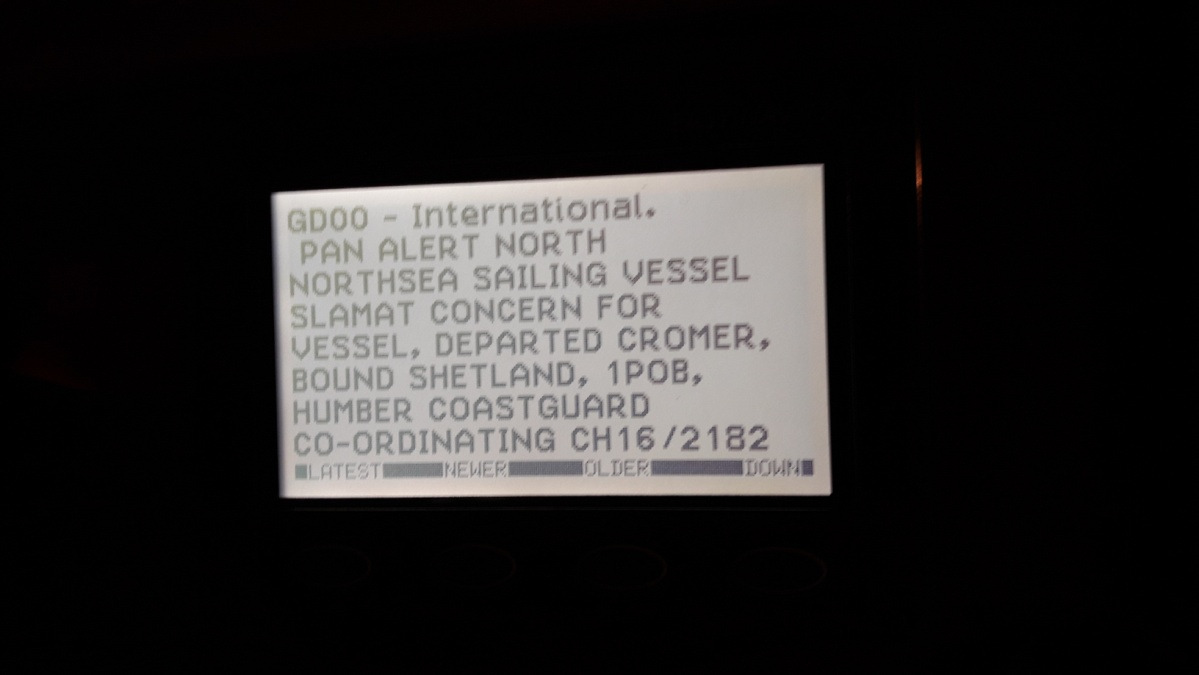
Navtex alert
It was me but why? Was something wrong at home? Why were they worried? Either way I felt this significant. Deciding I had to make shore to see what was going on I looked at the chart to see Peterhead as my best option some 70 miles north east. I started motor
ORIGINAL LOG · PAGE 6
sailing towards Peterhead with an ETA of around 10am. The vessel Nao Provider was headed to Aberdeen and would cross my path about 4 miles ahead. I would make contact by handheld VHF. I kept trying and on occasion heard calling which I thought mentioned Slamat. I then caught the end of a broadcast from another vessel definitely mentioning the name Slamat, but could not make contact with her. I finally made contact with the Nao Provider who kindly agreed to relay a message to Humber coastguard that all was well on board and Slamat was headed to Peterhead. After a good series of power naps at 0400 the wind freshened and we could sail. I slept again to be woken by the handheld VHF talking about Slamat. Reception was intermittent and it was definitely un nerving.
Turning on the FM radio I listened in horror to an eye whiteness account of a tragedy. An Australian was describing his view of a tower block fire, seeing mobile phone lights shining out of windows on the upper floors. He was saying that there was no way out for them, the fire was on the second and third floor and growing, consuming each floor as he spoke. It was a horrific description and it became apparent that this was not a historic news report, but the actual event unfolding, not in Australia but in London; The Grenfell fire. It was the most harrowing eyewitness description of unfolding calamity and certain tragedy. As a listener you knew that here was no hope, no salvation for the trapped souls. How utterly terrible.
0600 reacher up and pulling, land ahoy. It would not be long before phone reception and clarity. After calling Humber coastguard, It transpires that my AIS signal had dropped out off Cromer. Ashore there were a number of people tracking me on the AIS and with no signal, bad weather and tricky local navigation, concern was raised with the coastguard. It's a difficult thing. A lost signal may be alarming but is quite frequent. When that alarm is voiced then a chain of action is set in motion. Although I did not understand why Navtex was used, I did understand that there was concern for my safety, for which I am always grateful.
At 1100 hours 14th June I was alongside, DR4 136nm. The marina was fairly empty, easy to access and in a lovely bay in the corner of the large harbour. I walked the 20 minutes into town for lunch and supplies. It was apparent I should get the AIS and VHF installations checked out. With a great amount of luck I found the man in Peterhead who could help me. On answering the phone he said "Eyyyye, so you're the one everyone is looking for." Within 2 hours he was aboard with his meters and all was discovered to be in order. The AIS signal was good but apparently third party software broadcasting to the internet was at fault. The fixed VHF issues we put down to low battery voltage so I arranged for new batteries to be fitted the following day.
At 0545 Friday 16th June I slipped lines and made my way out of Peterhead harbour headed Kirkwall. The winds at W-SW12-14 were perfect for a course of about 350 degrees. After a lovely days sailing at 21.30 I was hardening up into the Stronsay Firth. By luck the tide was with as I made my way towards Kirkwall. With fading light I entered Inganess bay
ORIGINAL LOG · PAGE 7
and with evidence of salmon farming on the chart carefully made my way to the west side and some shallow water, perfect protection from stronger SW winds forecast. Finding a lovely spot, the Bay of Berstane, I dropped the hook after a great day at sea.
The following morning I made my way into Kirkwall. With a small cruise ship in port, the town was busy with people. I had lunch ashore and bought a few supplies finding a moment to reflect that only a week ago I had left Cowes. It seemed we live on a very small island.
Stronger winds had blown through so I decided to spend a night at anchor. With brisk wind and strong tides I made my way up through the islands to a small anchorage between the Island of Eday and the Calf of Eday. Both visitor moorings being taken, I anchored and ate dinner on deck in the majesty of a peaceful anchorage and dimming light.
Checking messages there were a couple of notes saying that I had missed some islands? I had planned to nip through the top of the Orkney group up to Fair Isle, quite forgetting that I would have passed islands to starboard. Oh dear, I would have to go back. I set the alarm for an early rise and went to bed.
I woke early but with no alarms. Looking out, things seemed a little strange. The boats on the visitor moorings looked different, somehow, further away? I went up on deck to see that we had dragged anchor right across Calf Sound. It looked like we were steady, half a mile from where we should have been.
I made a flask of coffee and prepared Slamat to leave. Conditions were moderate and at 0345 pulled up the anchor to retrace our steps to the Stronsay Firth. Heavy kelp had fouled the anchor, the cause and remedy of our anchor drag. At 0600 I passed to the south of Auskerry, gybed and headed north east up to Fair Isle. Back on track, Orkney to port.
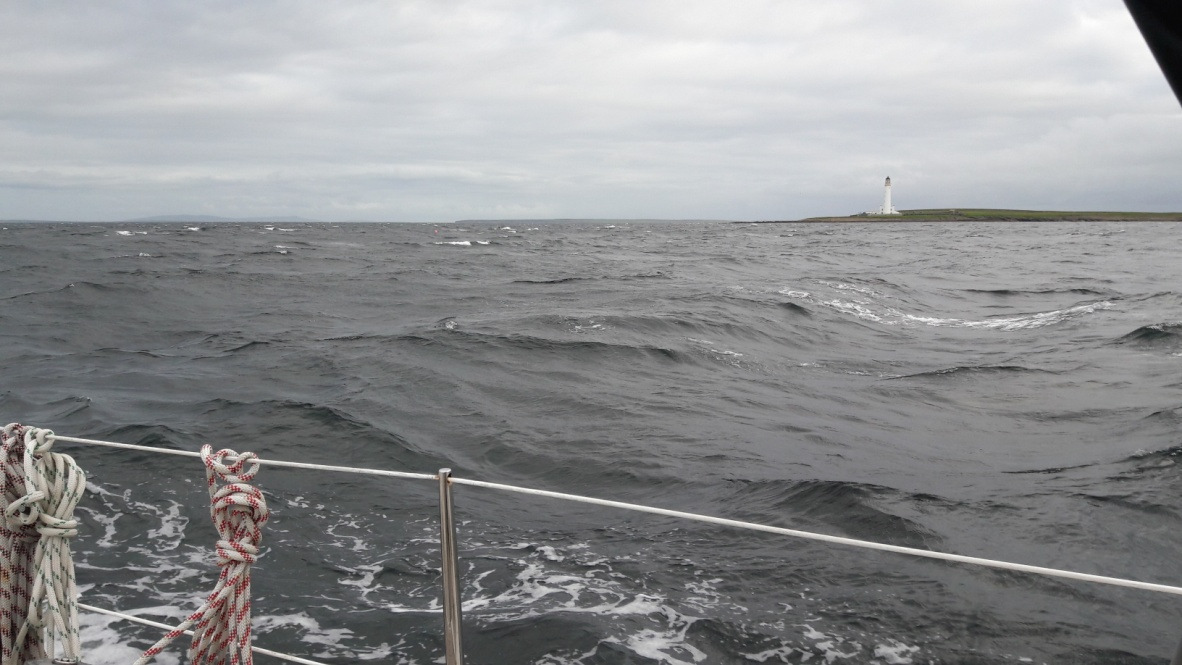
Auskerry
ORIGINAL LOG · PAGE 8
The morning was spent shaking reefs as the wind eased, by lunch carrying full sail. Having broken out of the lea of Orkney I could feel the Atlantic swell for the first time. It felt strong and I recalled Atlantic weather in times past. There was plenty of bird life about and as I passed the south of Fair Isle a great skua flew past, quite fantastic. By 1500 Tuesday 20th June I was tied up alongside the small harbour in Fair Isle. I spent a moment looking at the weather and working out a plan.
There was some big wind coming in on Friday 24th June. If I planned to make Ireland by week 1 July I would need to start the Rockall leg after that blow. I needed a suitable harbour for shelter, boat service, crew service (showers and restaurant) and as a good starting point for the Rockall leg. Looking at the chart Scalloway seemed the best option. I would need to leave in the morning so had better get ashore.
Being renowned for its knitwear designs, I had planned to buy a couple of hats while there. After about an hours walk and a few discussions with some locals, I found the hat shop house, Burkle. I met Hollie with whom I spent an hour talking about the process and how their knitwear is made. She had some fantastic items, real works of art and on reflection I am sorry that I did not buy more, but I did manage to buy hats. One for Amanda and a fisherman’s kep for myself. Super warm and both things of beauty, I bought in traditional colours; explained as any colour you would expect to see a sheep wearing!
The weather data was showing moderate SE winds in the morning, strengthening over the day, then clocking the following morning to the S, SW. If I could leave early I could head up the E coast of Shetland, make it over the top and most of the way down the W coast before head winds; a tough call but worth going for.
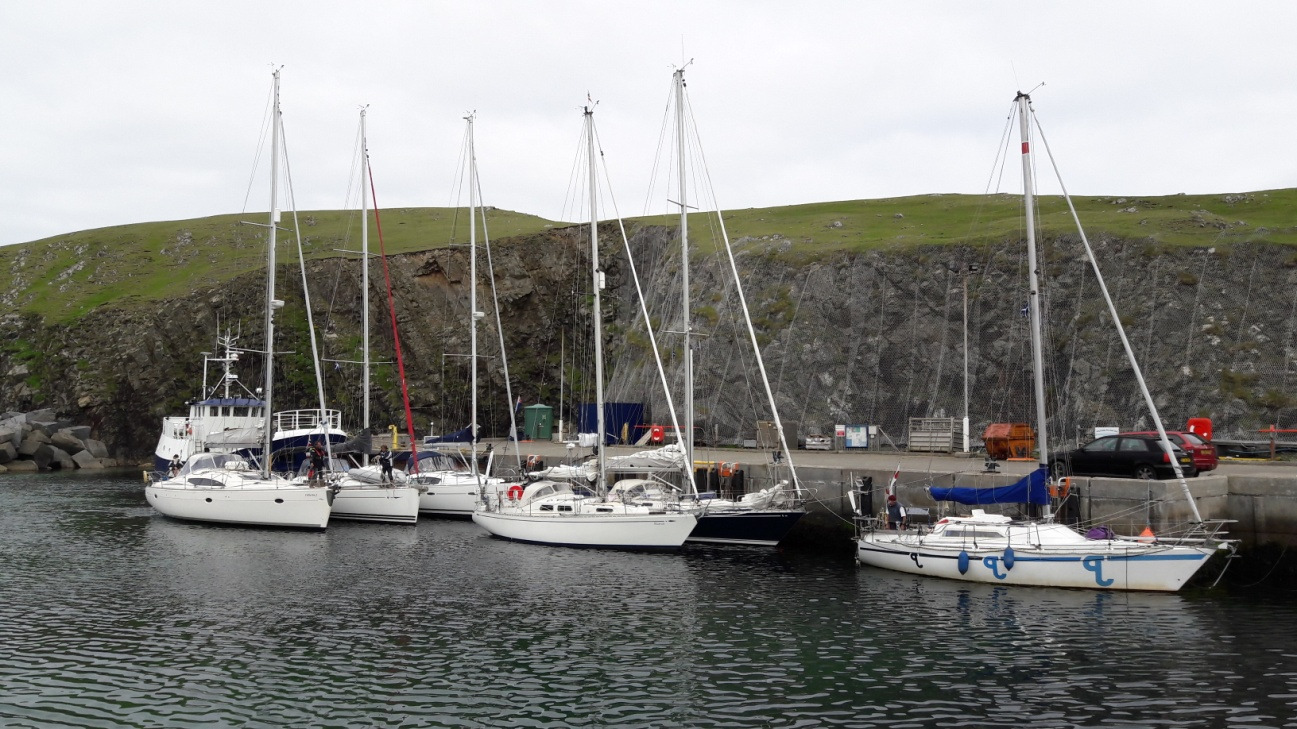
Fair Isle harbour
ORIGINAL LOG · PAGE 9
0730 off the dock and away, water temp 11.1 degrees and pretty cold. I set sail on 035 degrees bound Shetland and up the east coast. As expected the barometer had started to drop and Slamat was moving well in the SSE winds. By 1400 the wind was rising and I put in the second reef. With wind against tide the sea was getting up with plenty of white water. Starting to feel cold and a bit shaken up in the yawing motion, I knew I had to push on and get over the top before the winds clocked. As the day drew on the winds increased and the seas became bigger. I looked at my options. I could hold up in Balta Sound for a tide, or push on over the top. The entrance to Balta Sound looked narrow and with the sea running directly into the mouth, it looked like a dangerous entrance. If I carried on I would be in a wind against tide situation with possible Atlantic swell, committed into a potentially really nasty place. However if I got a break I could be in the lea of Shetland by early morning with fair winds, then head winds later in the afternoon. The barometer was falling a point an hour, really quite windy and rough. I decided it was safer to continue and keep offshore, out of the really aggressive headland tide, and hope for the best.
At 2000 I called Shetland coastguard asking for expected sea conditions. Nothing untoward reported so all good. I carried on north and at 2310 gybed onto port tack, my northern most point done at 60.54.34N.The wind had started to ease and conditions were moderating. There was no sign of the Atlantic swell that had worried me, just mist, rain and a semi twilight on the day of the summer solstice, official sunset 22.31, sunrise at 0327.
At 23.40 I was abreast of Muckle Flugga light, the rock unseen. Then for 10 minutes the mist and cloud lifted and there she was, a dark silhouette in the half light of midnight, quite stunning.
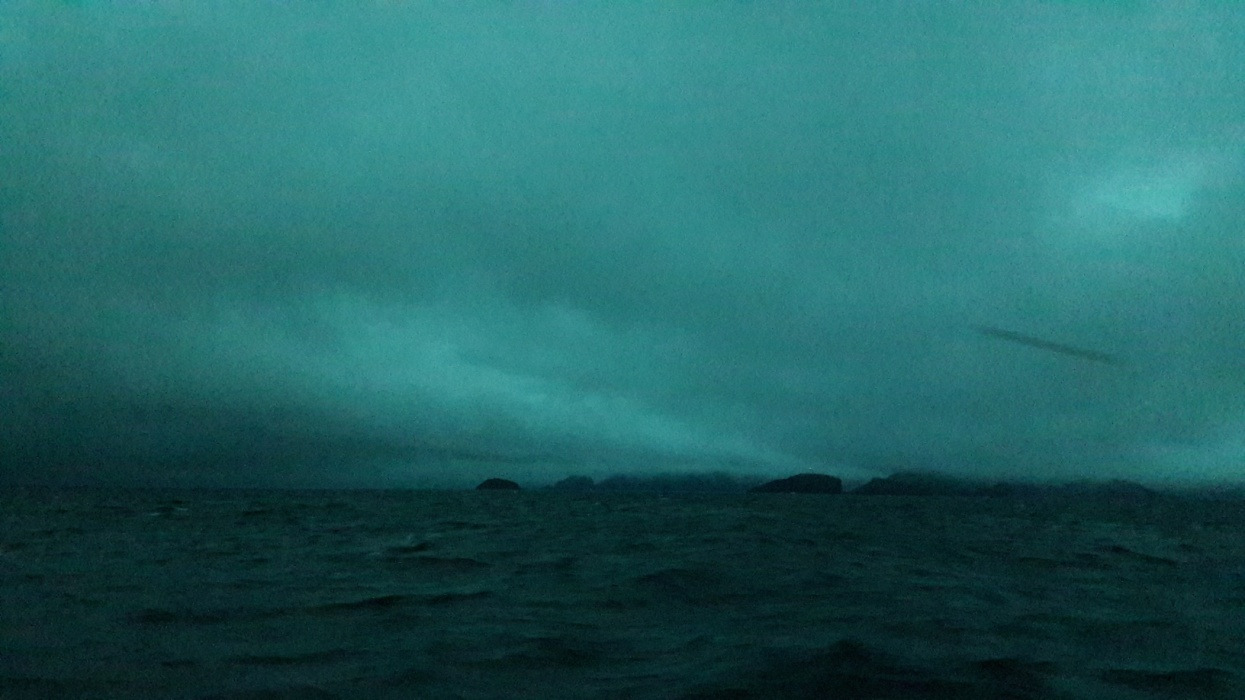
Muckle Flugga
ORIGINAL LOG · PAGE 10
I made my way south west with much improved sea as the lea effect took hold and the wind eased. Over the early morning I shook reefs and put them back in. With the wind clocking I was hard pressed, but making the headlands and sleeping in between.
All was well apart from a 15 minute escapade when I flicked my trusty thermos coffee mug overboard which, by some miracle, I managed to retrieve using engine and boat hook.
The wind died off and by 0900 I was at the Ve Skerries with very turbulent seas but a fair tide. Not a nice place to be in any weather. Bearing away I motor sailed up to Scalloway and entered the sheltered bay to find a nice looking T pontoon. I came alongside the hammerhead, bow to the west and the expected gales to follow.
Amazingly, as I was making fast to the dock I received a message from my brother in Dubai with a picture of Slamat arriving in Scalloway! Someone had photographed my arrival and posted the image of the vessel under the AIS / MMSI identification software. What a weird world we live in.
The wind started blowing and on the morning of the 24th I noted my max wind strength at 28kts. I approached my 3 neighbours who's indicators read 38, 40 and 41. Slamat was definitely under reading as suspected, but I could see no compelling reason to alter it. As it stood, I was never realistically going to see any more than high 20s and I was always going to have a fast, light wind boat; that all sounds too good to give up!
The wind howled for 2 nights. The long term gribs had looked bad but were starting to look better for the next leg. By Saturday morning I knew I had a gate to Ireland. If I left on Sunday afternoon I should have great reaching conditions out to Rockall, with the wind backing on Wednesday for a stonking run down to Ireland. The latter part of the week looked windy but if I could get south I would have easier conditions, maybe only F7-8. I couldn't hope for a better forecast so stowed last minute provisions, showered and went out to dinner before a great nights sleep.
ORIGINAL LOG · PAGE 11
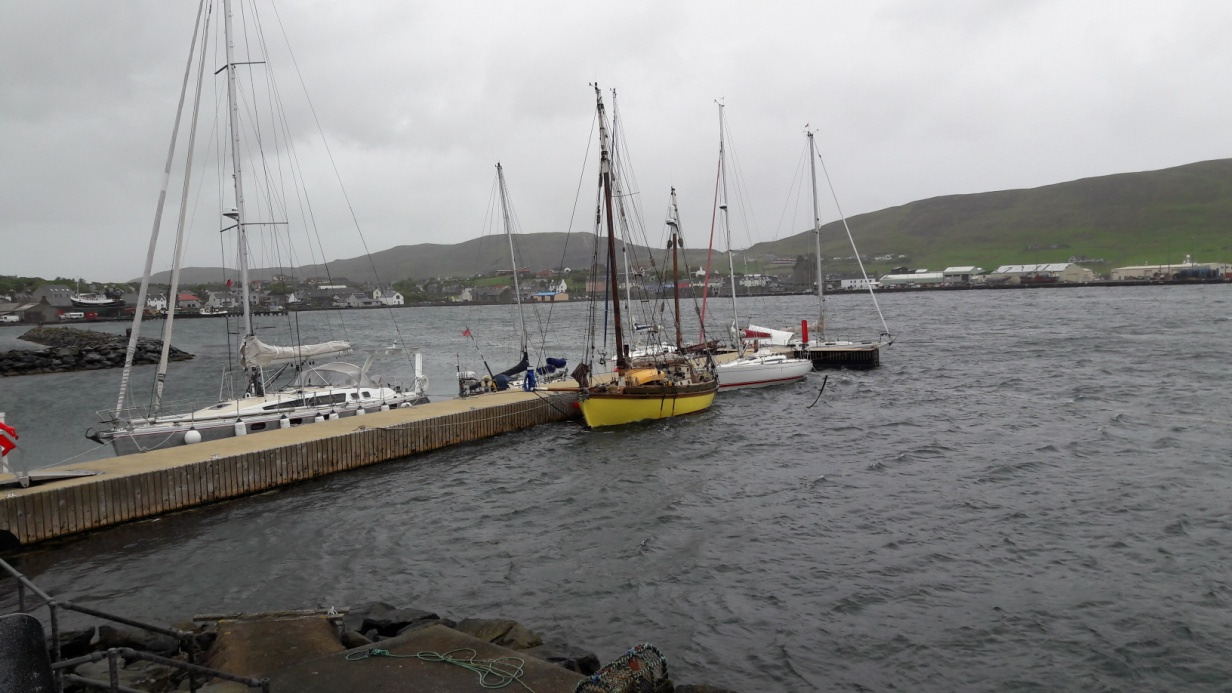
Windy in Scalloway
On the morning of the 25th June the wind suddenly just eased; it was over. At 15.30 I slipped lines and headed out into the bay. It was still pretty windy, rough with a 3m swell, but I expected conditions to ease. With radio 2 coverage of Glastonbury and Barry Gibb live on the radio I was off to Rockall, 405 miles, 2 days 9 hours and 35 minutes away, apparently!
I knew the general position of Rockall, but there were a few discrepancies between sources. Reeds also mentioned Helens reef, 2nm ENE of the rock, breaking heavily, so I wanted to stay clear of that. I plotted a course 5 miles north of the northern supposed position, to drop down on it when I got there. Being a renowned squid area I was hoping to see a few fishing boats trawling between rock and reef.
I was leeward of Foula by 1800 and after dinner in the cockpit watched the orange glow of the dying sun expectant of a better day ahead. Of course there was a ship hiding in the sun, a tanker bound for Sullom Voe, and being on the Turbot Bank a fishing boat. 2230 and the sunset deck check, all seemed well with plenty of gannets, fulmars and a few puffins to keep me company. With the barometer rising and the miles ticking by I spent a busy night increasing sail and by 1000 was flying the reacher and back up to speed. A good cooked breakfast was well received and as the day progressed the wind dropped right off. I started the engine and motored slowly on course, toping up the batteries and fridge.
The conditions were resetting and the Navtex was talking NE3-4 increasing 5. I could now see the islands of Rona and Sula Sgeir 15 miles to the south. The water had turned a jade green and with plenty of bird life about and a fishing boat to port was all quite busy. DR1 148nm.
ORIGINAL LOG · PAGE 12
Early evening and the wind filled in. We were sailing again, reacher up, gybing downwind. With more wind expected I set up the pole to goosewing the jib. A little adjustment and all was stable and balanced. Sven loved it and was working well. With the morning light came breakfast, bacon and eggs. I had a shave and freshen up and dug out my purchases from Lerwick. I had bought a pair of Icelandic woollen socks which were looking very appealing. I put them on and managed to get my boots back on, much improved. With steady winds we were pushing on well, 180 to Rockall.
"wind astern, moderate f5 couldn't ask for better."
Steady conditions over the day saw good sailing with DR2 137nm. Looking around it was dark and rainy to starboard and clear and bright to port. Slamat was in a great spot, on the edge of the cloud and dry. We had 100 miles to go and in the deep water, 1800+m, water temp touching 13degrees and nearly off the chart. The wind started to back and with the waves from the north the motion was quite rolly. Now in my third day I was starting to feel the discomfort of the motion.
"0700, feeling exposed and alone."
And of course at that exact moment the AIS alarm sounded. Ship ahead on an exact reciprocal course, fish in the scupper and a lone fulmar, not alone at all. The sea had changed. It seemed younger, unregulated, unpredictable, changing direction, slapping the hull a touch, time for the third reef as seeing 20+ on the dial. Feeling better with 27nm to Rockall.
"Much more white water about, aquamarine seas with pearl white crests, beautiful and powerful. Quite magical.... Couple of big broadsides, water over the cockpit, spray all over the place... I am down below...great."
The bird life was increasing with gannets and fulmars and at 14.30 I had a ship on the AIS. Ten minutes later I could see the rock; lots of birds everywhere and 3 fishing boats. At 1500 I popped in the gybe and started heading south. The West was done at 013.42.020W. The wind eased, the sun was out and the waves astern. Beautiful conditions. By 1530 we were abreast Rockall, and heading off to the Shannon, some 329nm away. The dept sounder had touched 75m by the rock but was now back off the scale. We had been close enough thank you. DR3 145nm
ORIGINAL LOG · PAGE 13
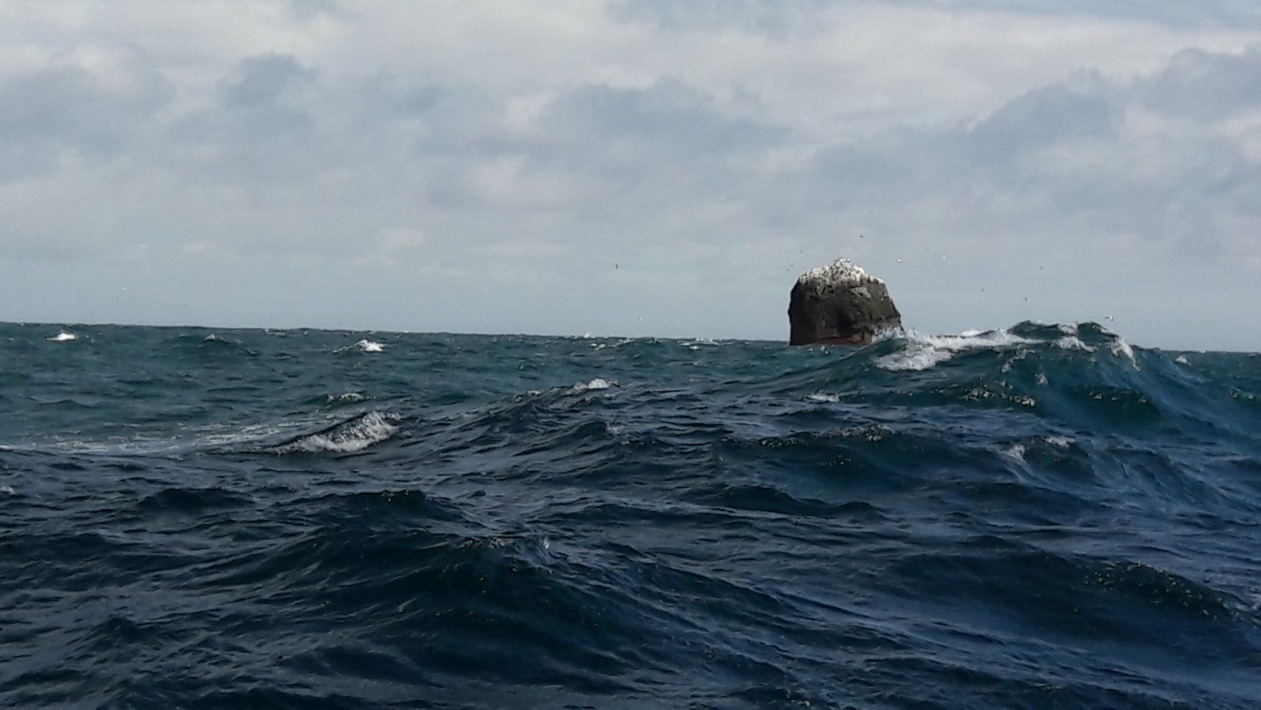
Rockall
Over the afternoon the wind started building and the seas were much bigger. With big breaking seas abeam and white water growling 5ft from the cockpit it was all a little scary so I retired below. It was a rough, noisy old night but with no shipping about Slamat made good progress south with little attention needed.
The weather forecast the following morning was a bit scratchy, with F8 definitely mentioned in both Rockall and Shannon. Over the day the wind backed so put the waves more on the beam. The seas were big and the motion quite uncomfortable but Slamat was making miles. DR4 157nm. We were racing down towards the Shannon, 180 miles to go. Still in the deep water it looked like we would pass onto the plate in a compression area. I could expect the sea to be bigger.
With the wind now really up and I was looking for ways to shorten sail. I tried pulling the main in, so feathering backwards and that was effective. We were definitely more comfortable. By 21.30 the sea bed was rising and the waves were really rather big and steep, hissing white foam blowing off the top. The Navtex indicated that the gale was in Malin and expected Shannon. I was in Malin and headed Shannon. It looked like I was 50 miles behind the big wind, how lucky.
ORIGINAL LOG · PAGE 14
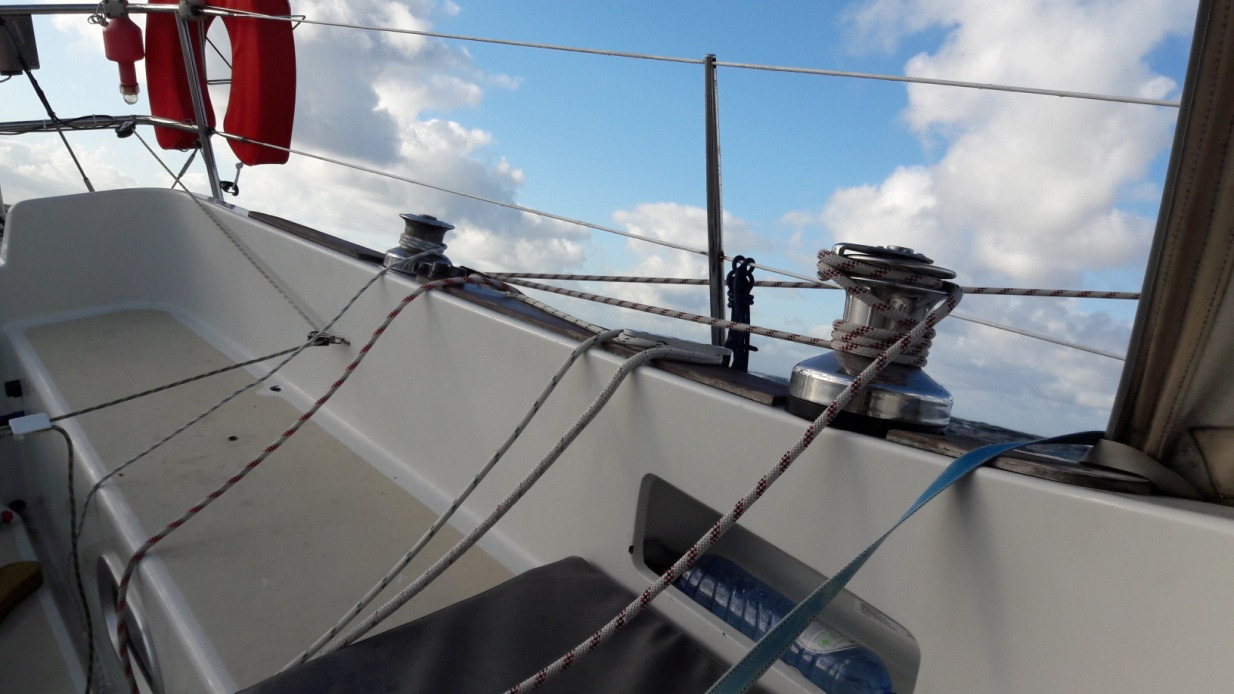
Rock and roll to Ireland
We were just coming up on the plate with three trawlers right on my track. I was pretty tied and being goosewinged, limited in my ability to manoeuvre. I called on the VHF but no response. One boat was stationary and time was running out for a gentle course alteration. I called explaining my situation, asking for intentions. At that point he started moving and turning out of my track. Great, no need to go beam on, or gybe. The seas were large, with big holes opening up as the seabed changed below. I was cold, damp and tired. The motion was getting to me and I was looking forward to a change. I had been very lucky with the weather. It felt the worst was over and at some point the conditions would moderate.
"1000 ....gone are the hissing waves of last night, the sinister nature of the chase..today the waves seem much smaller and less threatening.... sunshine always helps."
"11.30 land ahoy...Slyne head spotted through the haze."
We were reasonably on course and making good way. The wind eased and after lunch I took out the third reef, it was over. DR5 154nm.
"19.30 gybe into the Shannon. What an evening..... Beautiful sunshine, f4 sailing downwind in the calm waters of the Shannon, dolphins. How wonderful."
ORIGINAL LOG · PAGE 15
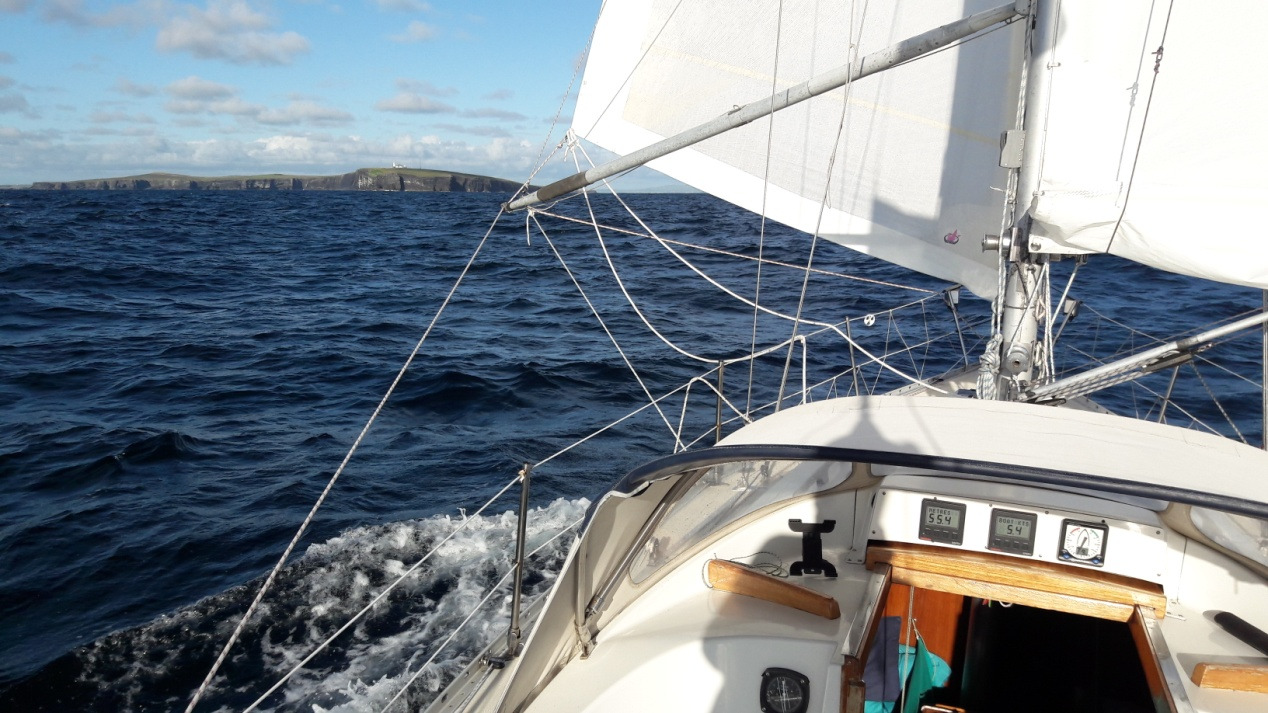
Shannon ahoy
I made a call to Amanda that all was well and by 2300 had the anchor down behind Scattery Island. I felt a sense of relief to have arrived in Ireland after a great sail and could enjoy a few days of rest before Amanda and the boys arrived for our summer cruise.
The following morning I locked into Kilrush marina and after a few shenanigans was safely secured alongside. Lunch ashore and relaxation was the prescription. The motion of the last leg had taken its tole and I was exhausted. Kilrush is a lovely small town with a well equipped marina and friendly staff. I spent three days resting and preparing Slamat for the family arrival.
Wednesday 5th July and Amanda and the boys arrived at the marina. I was delighted to see them. They all quickly made themselves at home and settled onto Slamat for 3 weeks cruising. We ventured out of the marina the following day and spent a night at anchor at Carrigaholt Bay. Fresh mackerel for dinner followed by monopoly, great fun. We all slept well and in the mild conditions of the morning sailed across the entrance of the Shannon into Smerwick harbour. The boys swam, at 15 degrees it was a little cold for me, and we went ashore for a good walk. Dinner aboard and all was well.
ORIGINAL LOG · PAGE 16
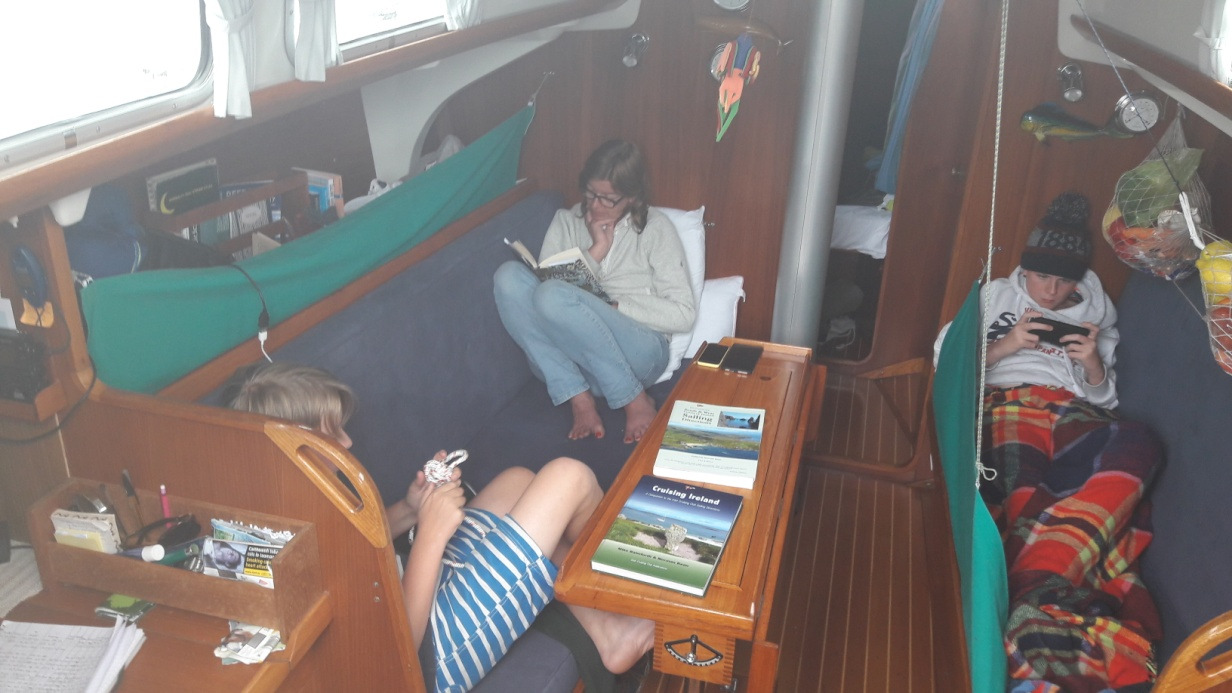
Sailing around the Blasket Islands to port we made into Dingle. It had been a hot and sunny afternoon and with lots of sea life we were all happy. Dingle seemed busy, full of tourists and we discovered it is the most visited town in Ireland.
The following days were spent slowly making our way around the coast, past stunning scenery and secluded bays. We anchored in Ventry harbour, then made our way out past the Skelligs and into Derrynane, up to Glengarriff and on to Bantry. The boys filled their days with swimming and exploring in the dinghy, cards and monopoly at night, and each day we pushed on a little towards our goal of Cork.
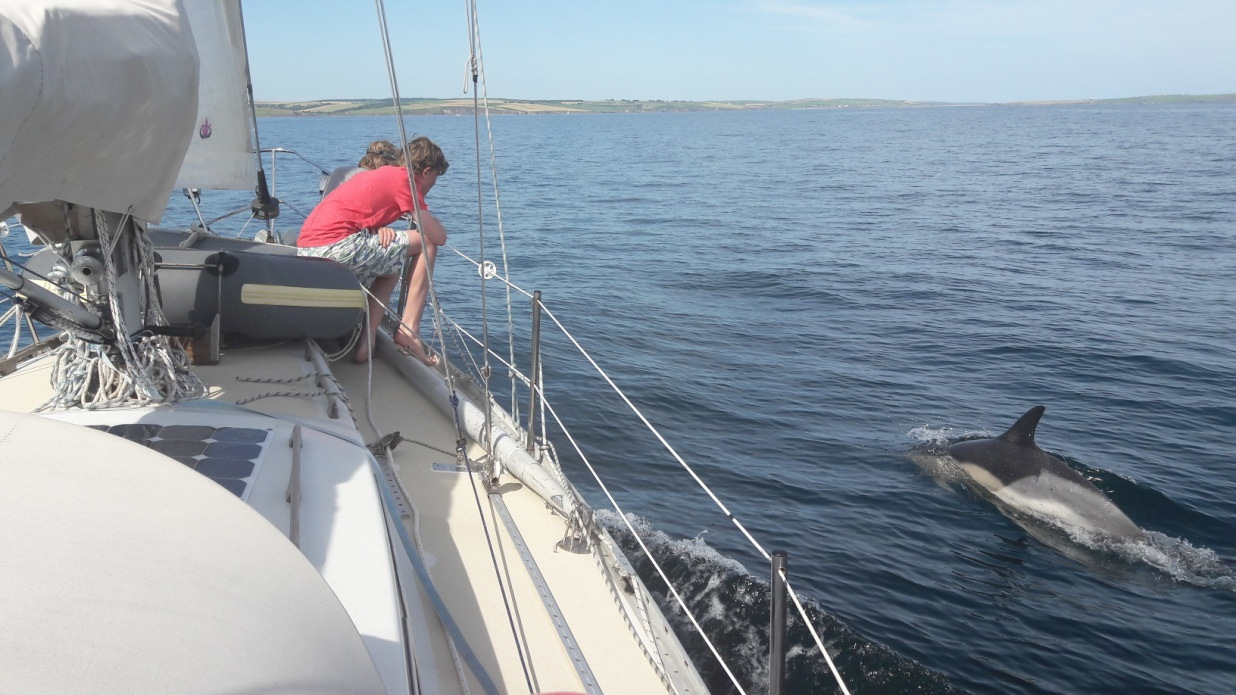
In the early morning mist we sailed out of Bantry bay and into the Atlantic. Conditions were mild in reaching conditions with plenty of sea life: birds and dolphins. We made our way out past the Fastnet rock, unseen in the mist, and on to Castletownshend. Picking up a buoy in the river we enjoyed the peace of the harbour after a long day at sea. We could expect a weather change soon and it felt good to be in striking distance of Cork.
ORIGINAL LOG · PAGE 17
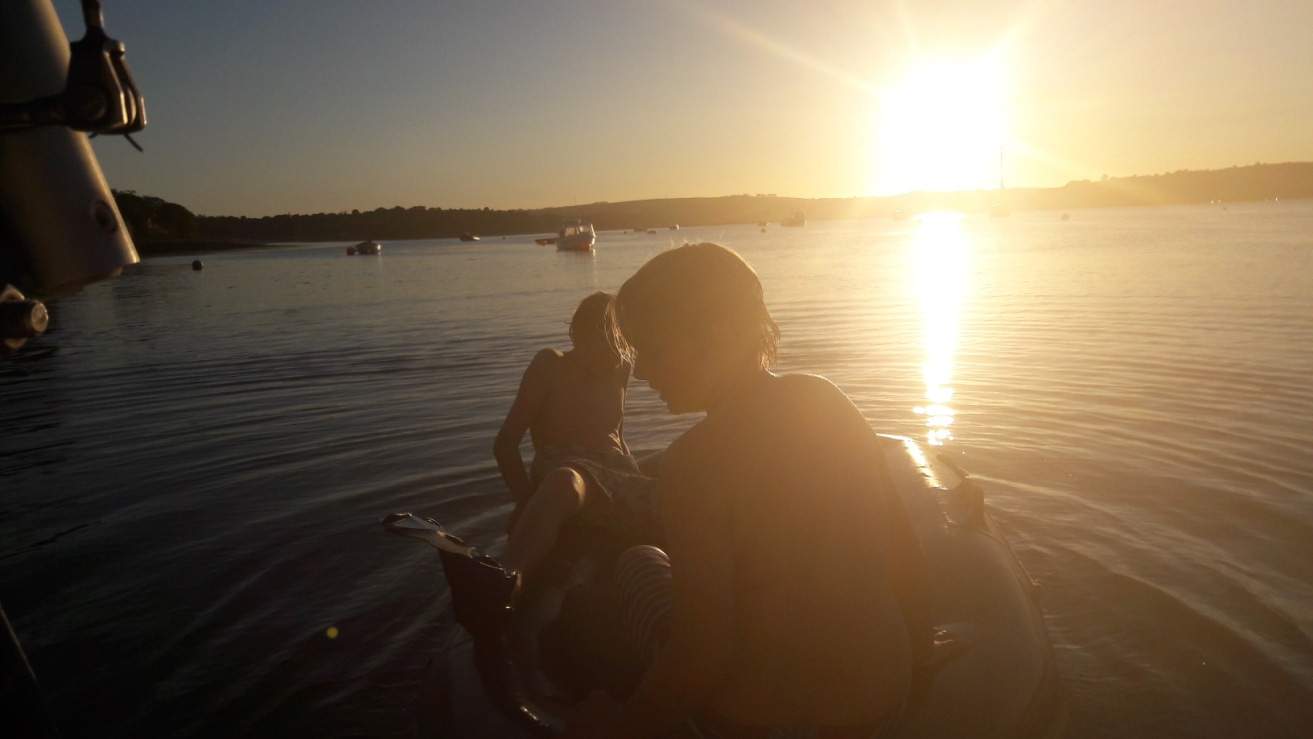
Swimming at sunset
After a morning walk we set off again for the short hop round to Glandore. It was a glorious day and we anchored off the beach, the boys ashore and Amanda and I reading our books in the cockpit. That evening we motored over to Unionhall for a very good meal ashore and a quiet night at anchor. Deciding to use the weather to push west, we headed off some 20nm to Courtmacsherry. The entrance is pretty shallow, and arriving at the wrong state of the tide we carefully made over the bar and into the estuary. We did go aground but a local boat came past and we followed him, much closer to the moorings to port, and found good water all the way to the pontoon. The boys swam off the dock in the evening sunshine before garlic prawns for dinner, cards then bed. The following day found us sailing past the Old head of Kinsale and up into the marina for a few days while the wind blew.
ORIGINAL LOG · PAGE 18
Happy days
Kinsale was fantastic and with a great marina and club facilities we enjoyed our stay. We walked to the King Charles fort, ate more good meals ashore and enjoyed the local beach. Eating breakfast on our final morning we had the pleasure of meeting Brian Smullen who came over and said hello. He had the beautiful ketch, Cuilaun, moored on the outer pontoon. Having returned from Cowes he was heading to Glandore for a local regatta. We wished him well and packed up ready to head up to Cork. With moderate conditions and stern winds we made Cork harbour entrance and motored up river and by 1500 were alongside the pontoon right in the heart of Cork.
Amanda and the boys would be leaving the following day and we had all enjoyed our time on Slamat. Being a family aboard again is such fun and leads to an intimacy that is seldom found on land. I would miss them all. We explored Cork and packed bags. Dinner ashore, cards before bed and the following afternoon walked to the bus station and said our goodbyes. It seemed only yesterday that they had arrived and as I walked back to Slamat to continue the journey I felt quite alone. Well, no point hanging about!
I prepared Slamat for sea, put up the lea cloths, stowed fresh supplies, filled with water and at 2000 slipped lines. We were off again. By 2200 I was out of the harbour and back in the Celtic sea, poled out with light winds. Some dolphins came to say hello and I settled into my first night with a star filled sky and a wonderful milky bioluminescence trailing from the rudder. Making course adjustment to avoid a couple of gas rigs and with light conditions overnight I slept well but covered little ground. Light winds all day but backing late afternoon saw the reacher pulling. I could now see 5kts of speed, a better result. DR1 115nm.
With variable winds I played with the pole and reacher trying to keep the speed up. There was a stunning sunset, many dolphins about streaming in the bioluminescence and a ship making its way up the Irish sea, What an evening!
At 0700 I was at my max south, 49.49.76N, and gybed to start making my way east again. It was a busy sailing day.... reefing in, poling out, reacher up, down, reef out, engine on, off all quite fickle. I felt I had to make the effort to keep the speed up. I could plan where I needed to be to catch the tide, but more importantly I could not afford to be on a headland when the tide turned foul.
ORIGINAL LOG · PAGE 19
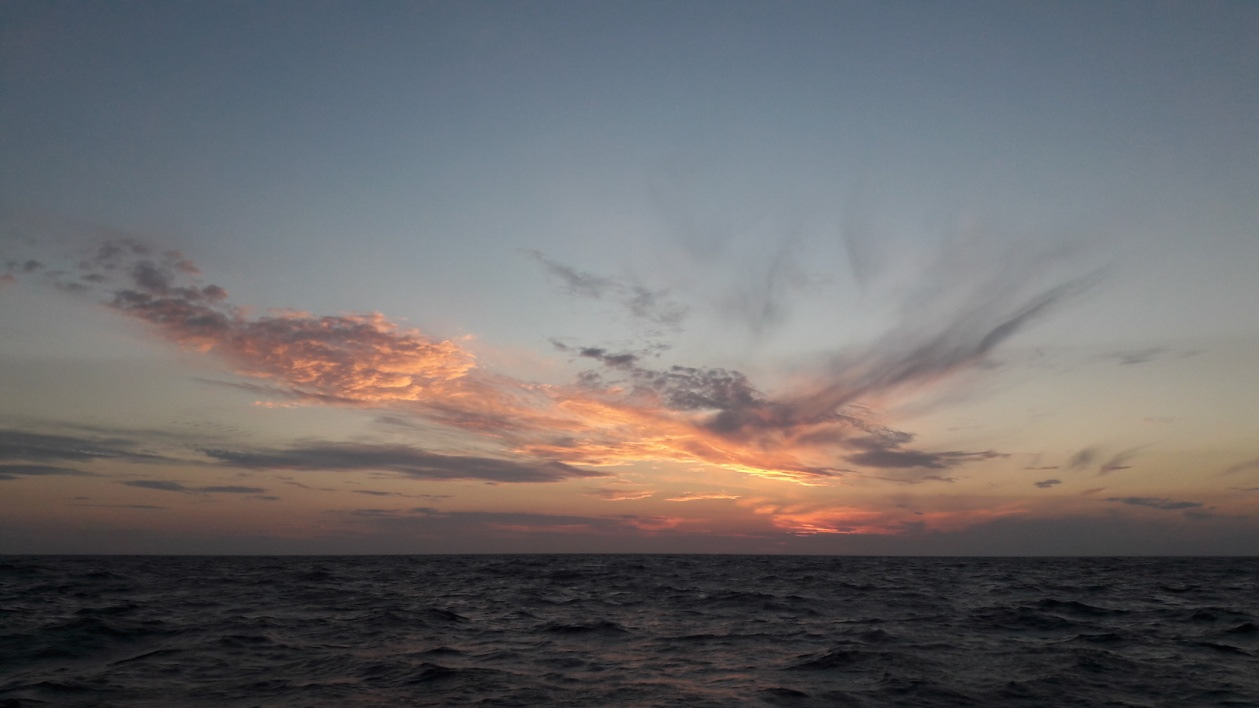
Sunset in the Channel
By 2230 I was off Salcombe with 55nm to Portland and 85nm to the fairway buoy and the Solent beyond. DR2 134nm. I woke at 0030 with the sails limp, nothing. Engine on again, but by 0230 we had wind and so full sail set, Sven on and back to sleep. At 0530 the AIS alarm woke me. The wind had changed direction and I had been sailing SE for 2 hours. Oh well, a better angle for the lighter conditions?
I made a few calculations. Having made only 20 miles in a whole tide last night I was now 25 miles from the Bill and keen to get past in the fair tide. I motor sailed in the light conditions making Anvil point at midday. I would have a hefty tide against, but if I motor sailed up Christchurch bay I should make home tonight, 25th July.
I cut into the bay, sailing and motor sailing and made good progress getting to Hurts narrows at 1630, crossing my tracks after 2441 miles. Pushing hard to get through the narrows, I opted for the north shore up the Solent. Following the 5 meter contour I sailed up to Leap spit and made the traverse. The wind had increased and I moseyed down past Egypt point feeling great about being back in home waters.
I stowed Slamat on the go and at 1915 turned the engine off, secure on my buoy deep in the protection of the Medina.
All was well after a great adventure
ORIGINAL LOG · PAGE 20
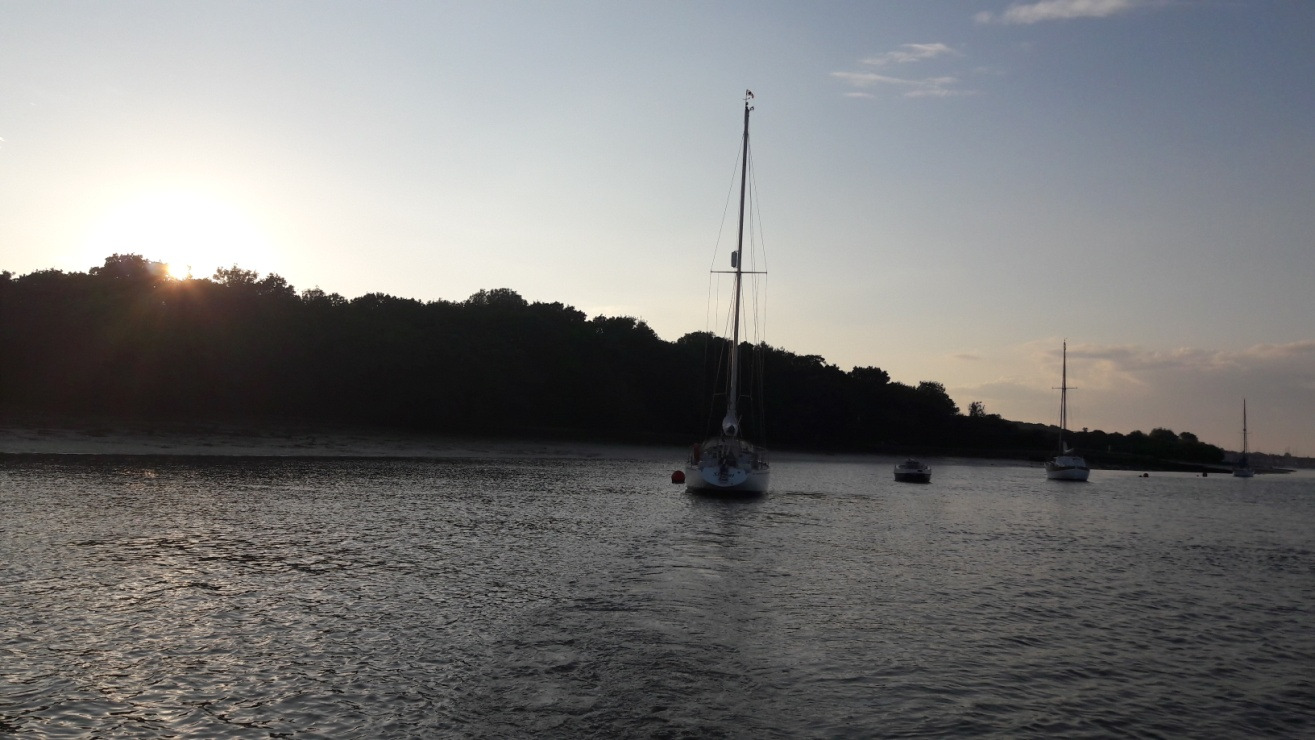
Slamat at home in the Medina
Copyright. Not for publication without prior consent from the author