
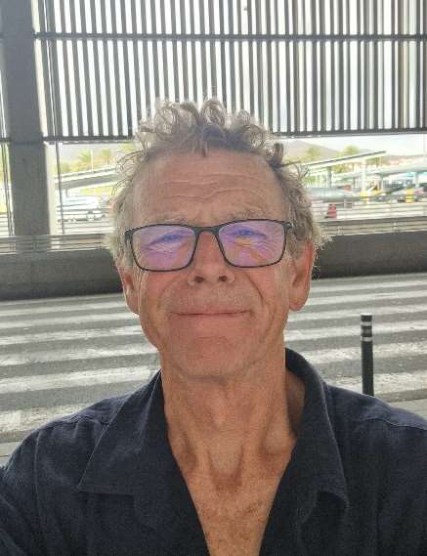
Owner, crew and author
Jason Lawrence
Vessel
Slamat, a Sparkman and Stevens Sagitta 35
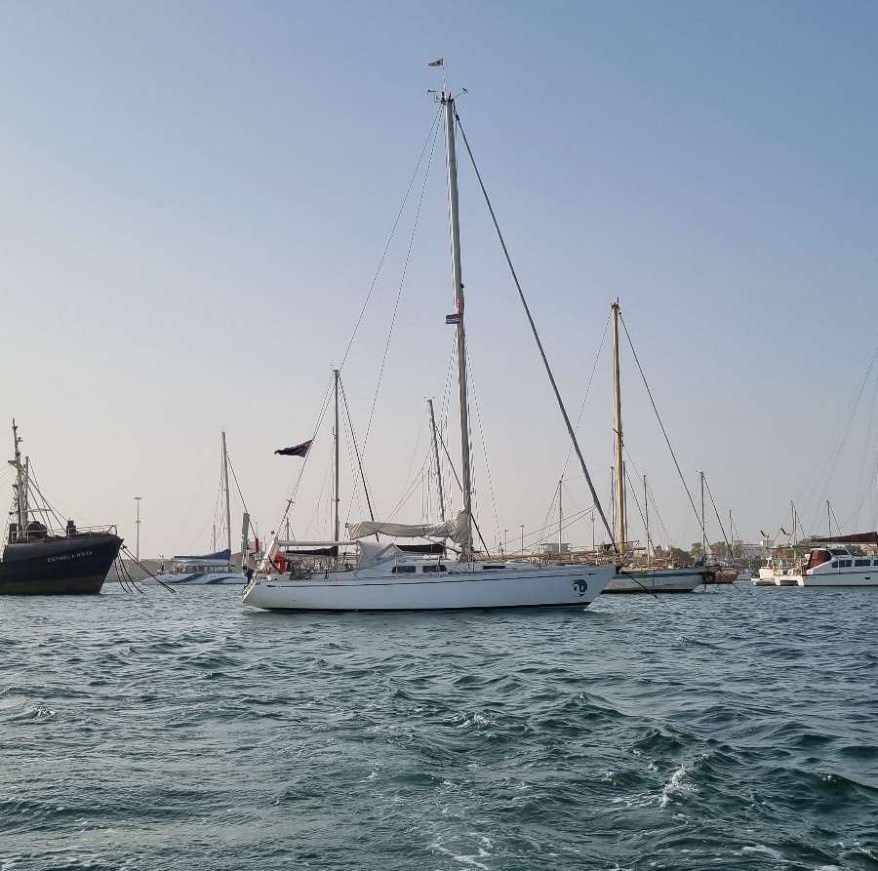
Slamat at anchor Palmeira, Sal
Scope of Cruise
30 January 2024 to 12 March 2024
A cruise leaving Gran Canaria, over to Dakhala, down the coast a little, over to Cape Verde group and back to Gran Canaria.
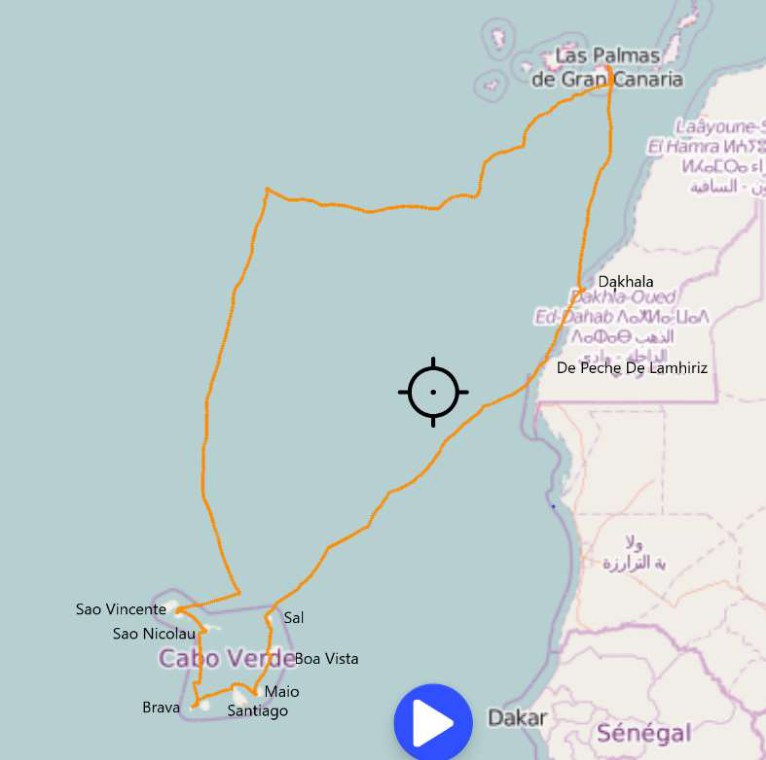
Slamat Track Countries
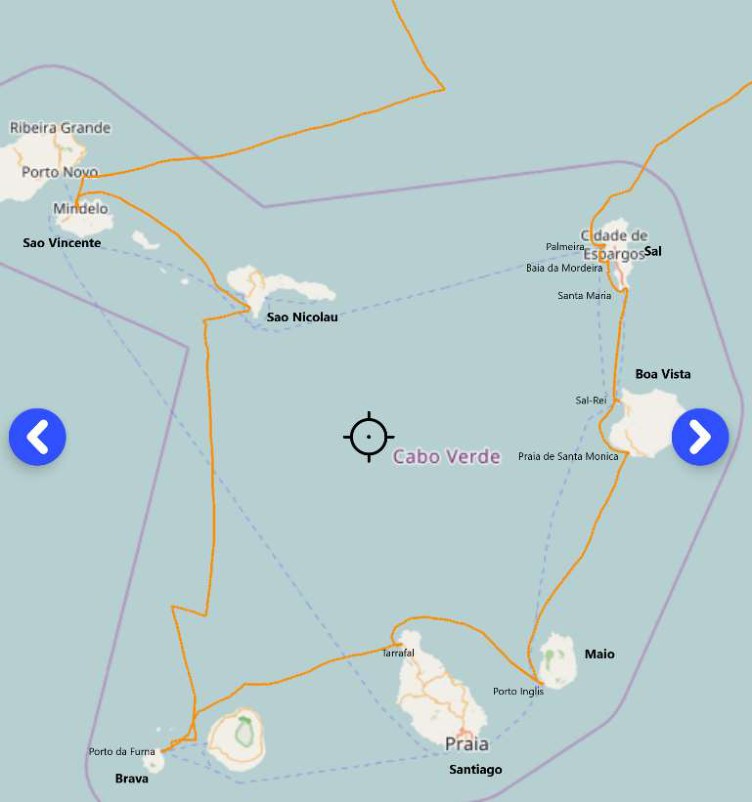
Slamat track Cape Verde group
Arriving in Gran Canaria on 14 January 2024, the feelings of guilt and loss at leaving home, Amanda and the boys evaporated in the warmth of the calima as I struggled to the taxi with my bag and 17kg genoa. Having trialled our new large genoa, we found it unsuitable for short handing and needed to jettison it in favour of the old favourite.
Jean-Jaques and I had sailed Slamat to Gran Canaria in the autumn. With the current orca anxiety behind us we had a great time together and an opportunity to bond on a different basis. I would thoroughly recommend sailing double handed with your teenage children. We both returned for Christmas with JJ moving on to the Caribbean for a few regattas before further UK commitments. I had Slamat ready and waiting in Las Palmas. Without a plan but with good intent, I was ready to go sailing.
Having spent time in December cruising the islands, I found the anchorages exposed with sole shore excursion un rewarding. Amanda has always been in charge of shore activity and without her it seemed to hold little interest. Sailing focused, I was looking for more of an adventure, foreign landfall and new anchorages.
I had mused on the idea of a passage back to the Canaries from Cape Verde. It’s not well- trodden and for good reason. Thinking that global warming might make it possible, I would have a very good look at the possibility. I planned to have Slamat back in the UK in August and if the 900- mile windward passage wasn’t possible, there were alternatives. A transatlantic is always nice, only 18 days to the Caribbean or Brazil, but a long and tricky sail home. There could be an option to leave Slamat in the Cape Verde, but that was unknown. I was also inspired by Ed Clay’s adventures in Senegal (RC57), but not medically prepared so had to discount that option.
First jobs first, get rid of that menace of a Genoa. Being big at 130 percent it had little use other than in very light airs, and when significantly reefed the foot height induced so much heal and rudder pressure I considered it unsafe. The best pace for that sail was in the warehouse. It took a good 10 days of effort with the package stuck in customs and various e mails in Spanish to get it gone, but UPS finally got it on its way leaving me free to move on.
Looking at the weather charts I thought there could be possibility of a passage back along the African coast, using the headlands to either duck out of any weather, take a break, or stop to let the wind clock. Researching likely headlands, I noted on Google Earth an interesting new marine facility at De Peche De Lamhiriz (Pt Galha 22.11N 16.47W) and thought it worth having a look in passing, a great opportunity for a bit of FPI. The plan was formulating; Dakhala, De Perche De Lamhiriz, Sal in the Cape Verde and on through the islands. It was a good start.
With tanks full, provisions washed and stowed, I slipped lines 0800 30 January, bound Dakhala Morocco. Weather looked good and steady at NE4-5 over the 3-day trip so I felt confident in Slamat and our sail wardrobe. On the drop off I put out the fishing line with the no1 lure and new line. Bang; 3 minutes into it and the line snapped with a 5 ft dorado leaping out of the water astern. What a terrible shame. The 150lb line was just not man enough and that poor fish was on its way to be recycled, with my no1 lure.
No more fishing for a while, time to put up the cruising chute. We had a lovely sail down to Dakhala. Beautiful sunshine, pleasant winds, some coloured sail, poled out genoa work and general good sailing as I started to get into the rhythm of life on board again.
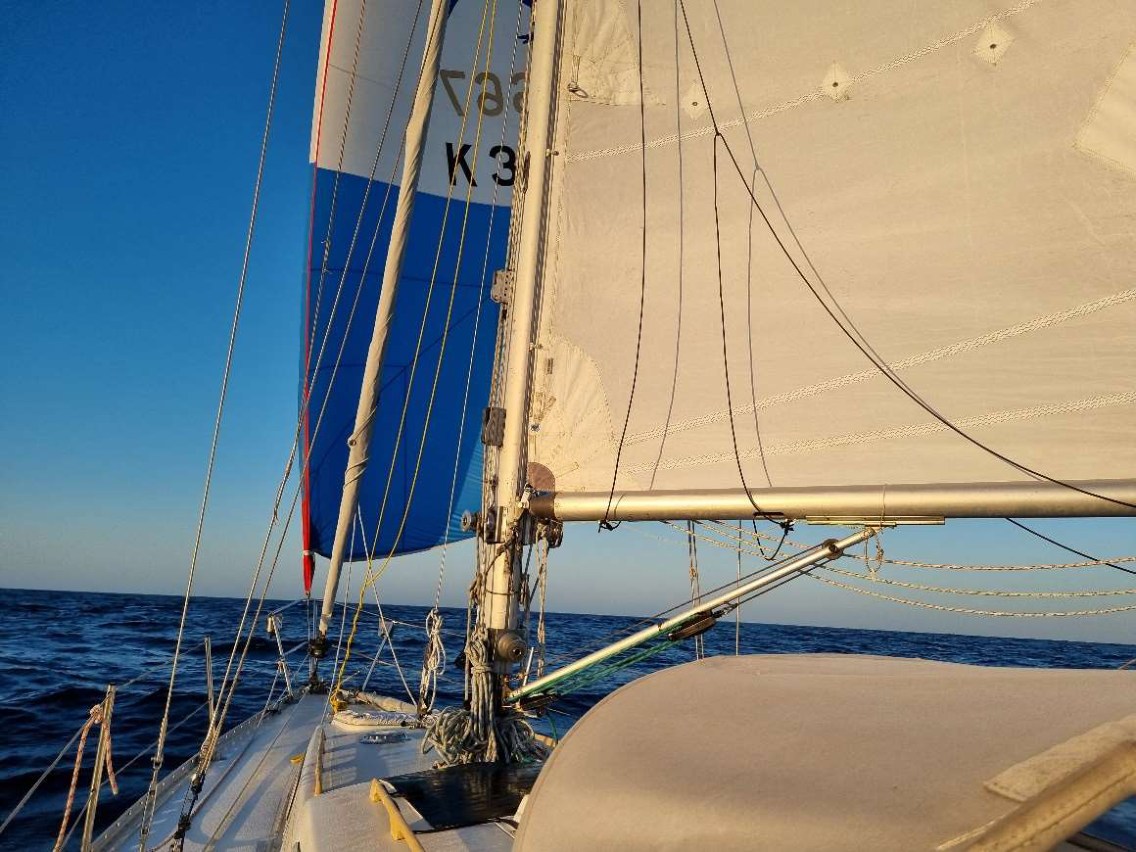
Slamat reaching off to Dakhala
There’s always a lot to do when single handing. If it’s not attending to deck, its planning the route, managing supplies, cooking and below deck works. In addition, there’s the running jobs list that builds on every passage where you can actually see what need attending to when opportunity presents.
Approaching Dakhala in the afternoon sun, I was amazed at the abundance of sea life, but of course there were thousands of fish traps and buoys. Closing the approach, the intensity increased with fishing buoys literally every 50 meters. Dakhala sits behind a long spit of land with a narrow, marked entrance channel. In the calm weather I motored through, reporting to the authorities. I found a good spot to anchor close to the commercial port, opposite the Mosque. I planned to just rest and spend a night at anchor, so no intention of going ashore, and reported such to the authorities.
2300 and I woke to aggressive thumping on the hull. There was a police boat alongside with 3 quite excited policemen demanding papers. After establishing our identities and photographing paperwork the meeting concluded and sleep returned.
Sunrise and I was off, taking the tide down the sound in F5-6. Heading south, I weaved my way through the fishing buoys which slowly thinned, disappearing some 15 miles from the entrance.
I had seen many local fishing boats, all with a very distinctive design. Although only some 25ft long, all boats carried a sheer bow some 8 ft high. I could only imagine this was to cut through a
very steep, short sea. With water depths of 25meters some 25 miles offshore and shallowing, one could imagine a very big and untenable sea as the Atlantic swell rises over the shallows. It was apparent there would be no refuge on the African coast in bad weather.
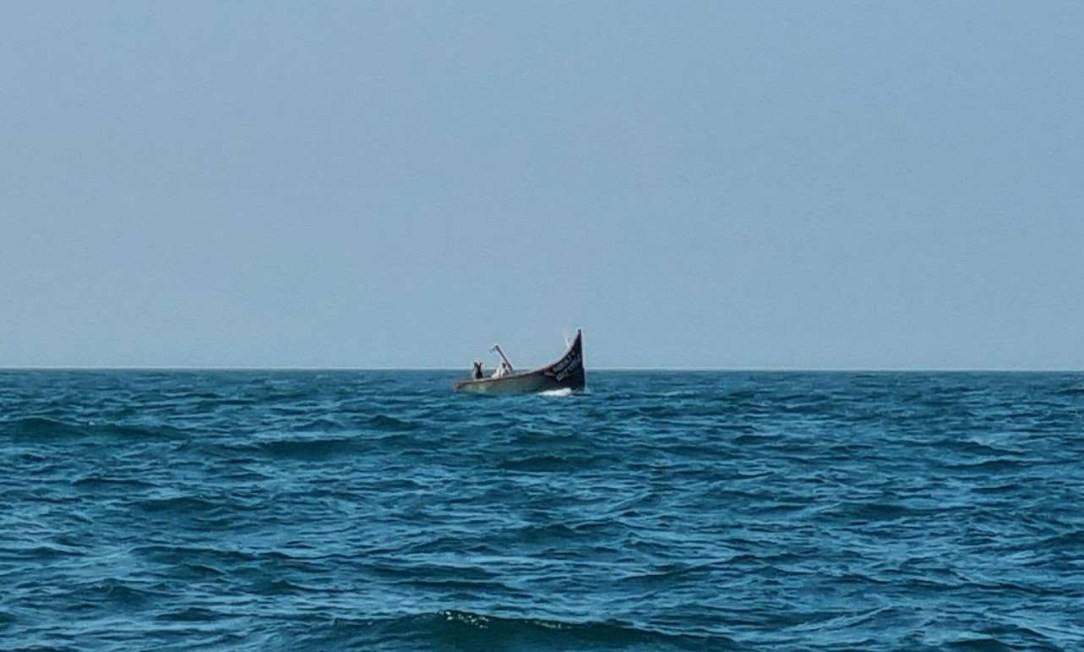
Local boats designed for big seas
That said, I was on my way to De Peche De Lamhiriz, some 100 miles south to see the extraordinary new marina in the desert. As the wind built, so the reefs went in and a dark windy night ensued, with the waves racing behind, roaring their presence as we pushed south. I had seen a few military vessels during the day and as the darkness fell, I could see 30 or 40 large squid boats outside the 12-mile limit; fishing Sahara squid?
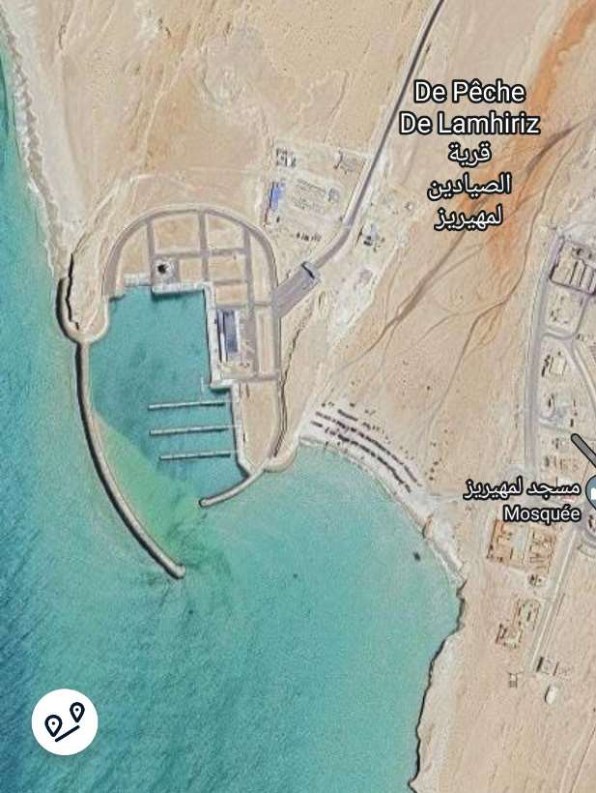
De Peche De Lamhiriz marina
The coast down that way is pretty desolate with what looked like a military observation post the only visible building. I decided to make my approach at dawn, between an island and the coast. I slowly sailed through noticing the shallowing depths. The whole bay was very shallow at 4-6m, and making my way to the marina entrance, some 150 meters off, I was contacted on the VHF. Surprised by my ambitions they were unsure what to say, but made it clear that I was not welcome. I suspected as such, turned around and prepared for my next leg; off to the Cape Verde, some 500 miles SW. I have to report that on lowering my club burgee, it detached from the staff and now sits in the bay off De Peche De Lamhiriz as a small souvenir of my visit.
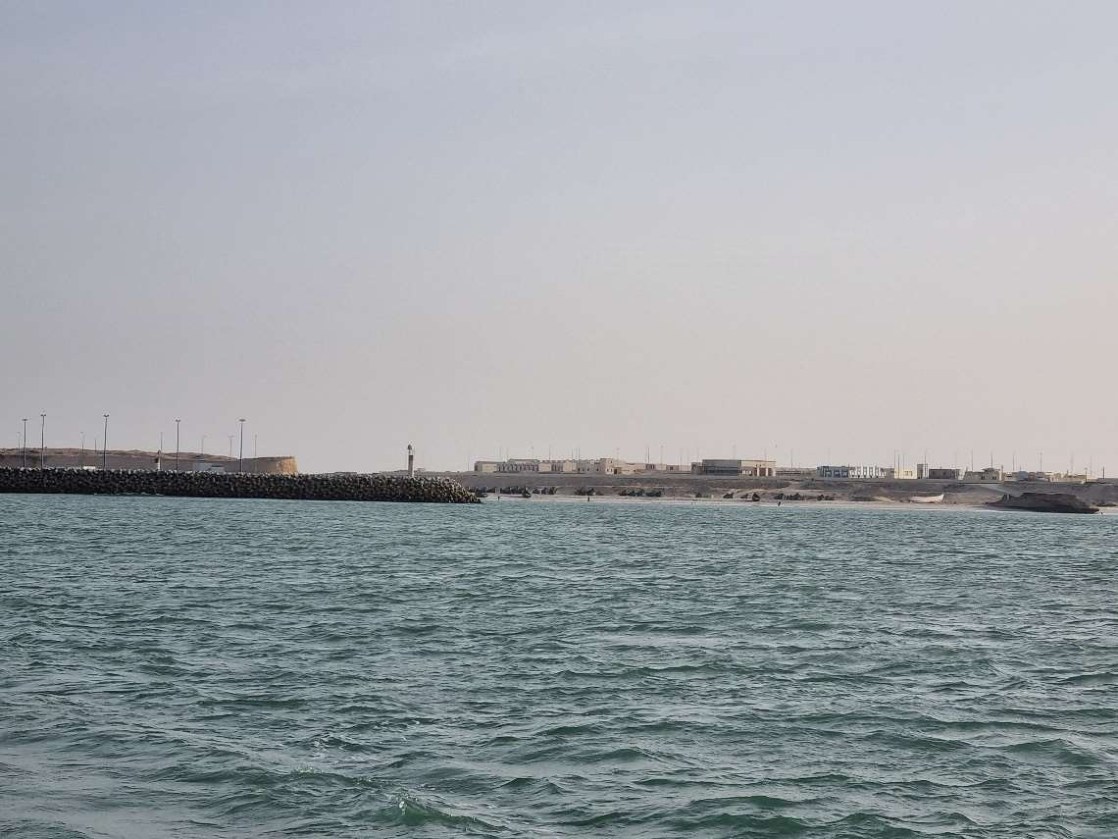
De Peche De Lamhiriz marina entrance
I did take the opportunity to submit a report to the Navily app with comments, but note it has been removed together with all references to the port of De Peche De Lamhiriz.
4 days of beautiful downwind sailing, NE5-6 saw a dawn arrival in Sal on 7 February, and the anchorage at Palmeira. Again, I was amazed at my maturity in slowing down for a daylight arrival. It had been a really lovely passage, bird life, dolphins and flying fish, the first of the trip. Warm winds with reasonable seas and Slamat had behaved beautifully. I busied myself with the formalities; checking in, immigration, phone sim card, local currency and lunch ashore. With no agenda other than boat service, (diesel, water, laundry and supplies) and Slamat in safe anchorage I knew I could take a moment to explore the main towns while I formulated an ongoing plan. Palmeira is a point of entry, so there were perhaps another dozen cruising yachts on station, some large like Adix, the 65 meter schooner, others smaller like Slamat
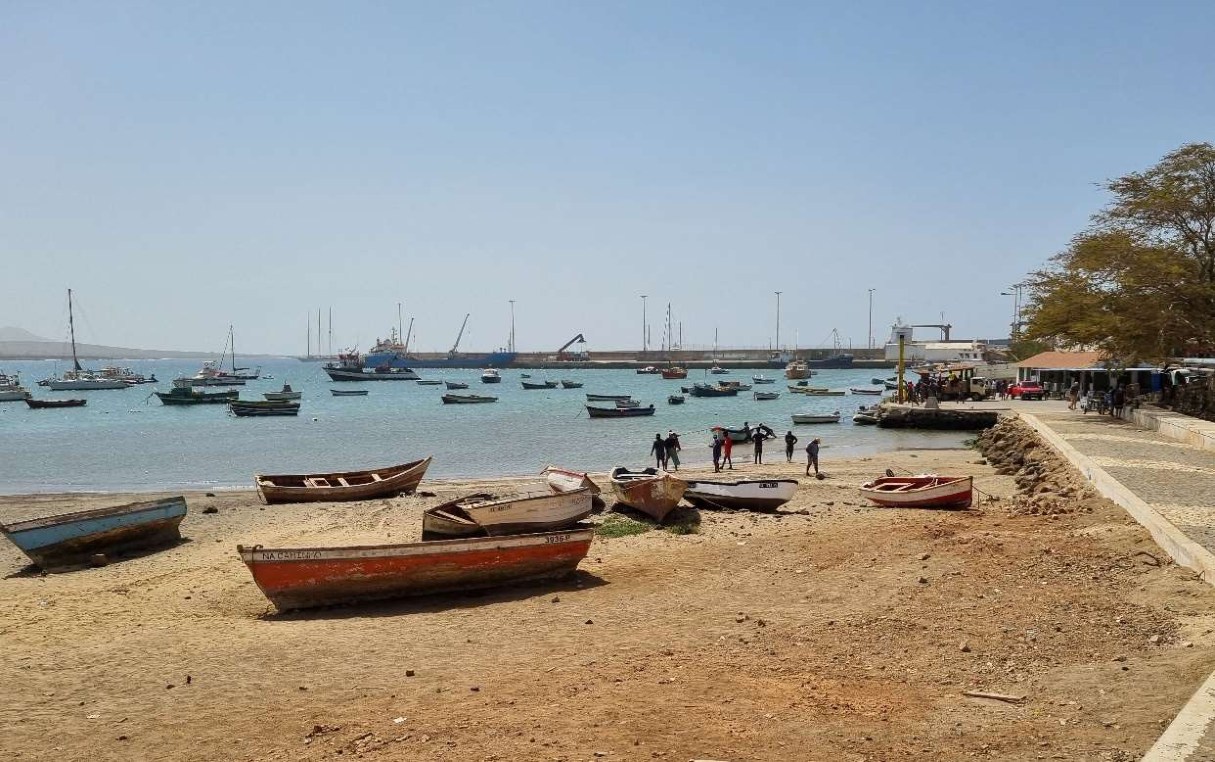
The anchorage in Palmeira
The Island of Sal is pretty barren, definitely with an African feel. International flights bring sun loving tourists to the designated hotel resorts with limited local integration. However, the feel was pleasant with the friendly local population servicing the tourist need, while maintaining their industry. With boat service complete and a few good meals ashore with fellow cruisers I was ready to leave. I had a friend in Santa Maria, so planned to sail to the south to meet up for dinner, but on route would anchor for a few nights in Baia da Mordeira to swim and enjoy.
With water temperature at 25 degrees and warm winds it all felt pretty good. Wind seemed to be stable at NE5 and although you could feel the surge, swell conditions were not uncomfortable unless a beach landing was planned, then consideration was required much like other ocean islands. I had noticed that the sheets and lines were becoming stiff with salt and even after swimming, noticed the definite salinity of the water. It was no surprise the island is called Sal
I met up with my friend in Santa Maria, who guided me to a lovely anchoring spot opposite the beach restaurant Agulos, and after a successful beach landing was reminded how much I like going to dinner barefoot in the sand.
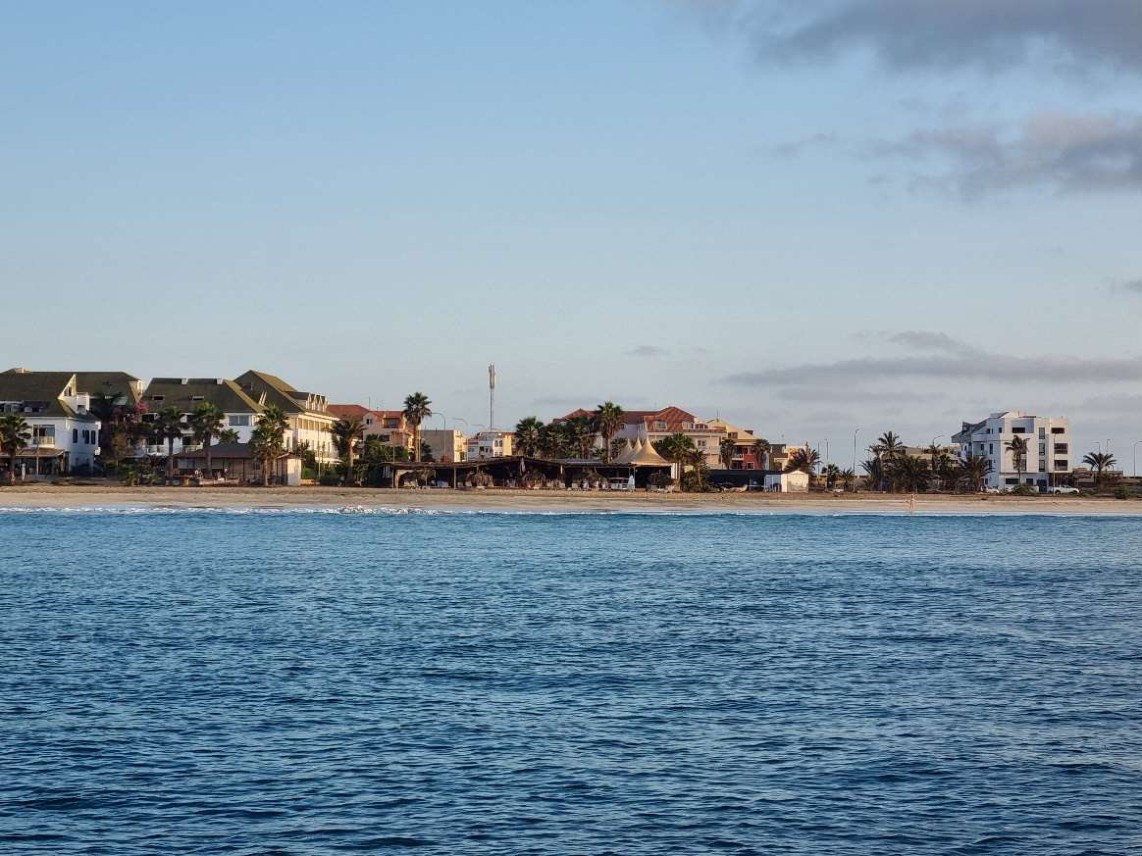
Good holding off Agulos Santa Maria
Dawn departure saw a swift 30nm passage to Boa Vista and the town of Sal-Rei; King of salt. Having recently read Trader Horn and with centuries of Portuguese salt extraction and trading with continental Africa one could logically understand how things had developed. Salt was key to life in internal Africa.
It was carnival in Boa Vista and although ashore only briefly, I definitely got the feel of greater friction between the tourist and locals; perhaps stimulated by Rum and carnival. I headed off the following day and after a brisk passage found a good spot to anchor in the lea of Praia de Santa Monica, opposite the shell of a pre-pandemic planned hotel. Another stopped construction project, a feature of the islands in the eastern chain.
Dawn saw departure for Maio, some 65nm SSW. Another trade wind sail along the sub sea island ridge. I was expecting interesting fishing, perhaps a small tuna, but caught a huge Wahoo. Unable to lift it over the side, it ate through the 200lbs wire leader, falling astern with just my beautiful lure in its mouth as it swam into the depths.
Approaching Vila do Maio and Porto Ingles in last light, I thought the cross on the foreshore aligned with the church on the hill an appropriate transit to drop the hook. Maio looked beautiful in the evening light and I watched the locals returning from sea, using hidden steps in the rocks to access the shore. Appropriate if you have a wooden boat, not so great in a rubber duck; I would use the beach.
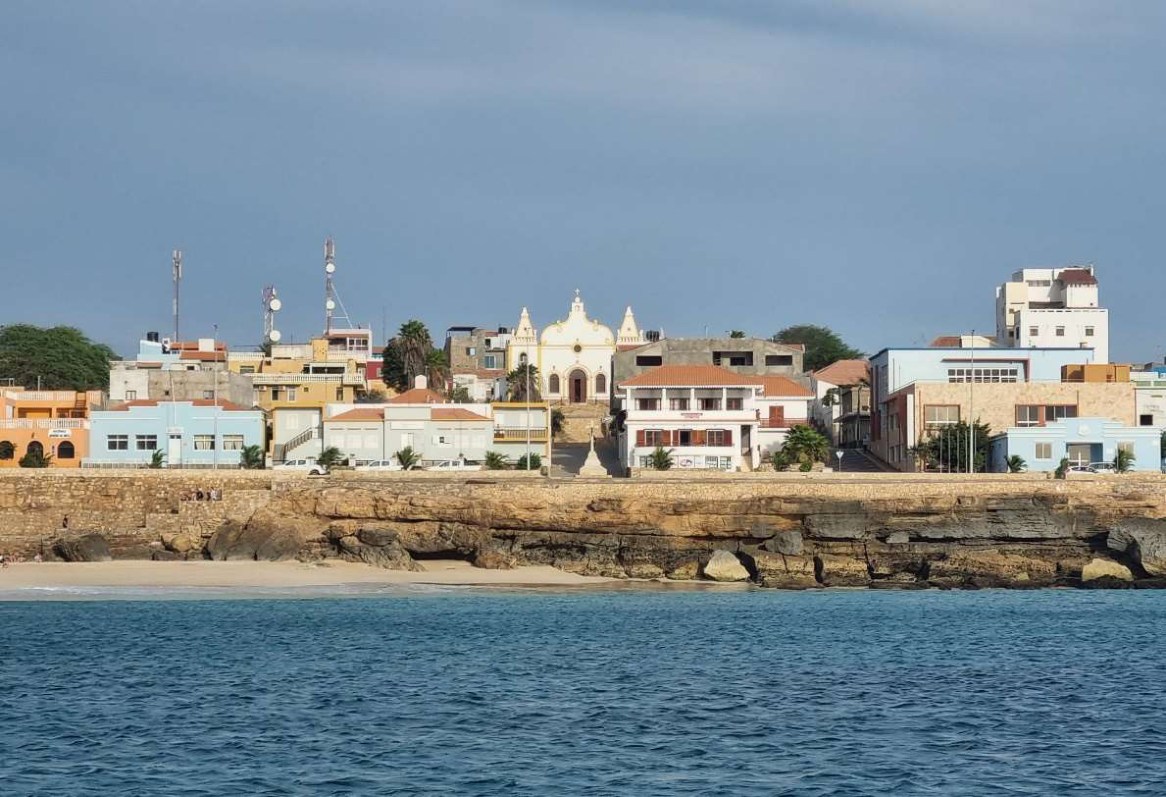
Slamat finds a blessed anchorage
Checking in the following day I walked around town and on to the derelict construction site of 50 small beach houses. Another thwarted pre-pandemic dream. I returned to Slamat for a few jobs and to make plans for the next leg. I definitely wanted to stop at Ilha da Sao Tiago (Santiago), Fogo and Brava. I was concerned about beating north up the channel between Brava and Fogo, so opted for a leg over the north of Santiago to stop at Tarrafal, thereby approaching the Brava Fogo channel downwind. This would mean not stopping at Praia, the capital, but felt no need. I had read of security issues in Praia, and singlehanded one is an easy untraceable target, so caution and valour and all that.
Predawn and laughter from the beach as the 2 strokes are started and tested before a surf entry. Groups of local fishermen gather at single boats to launch through the surf and drop off to others on moorings. Church bells welcome the dawn and its time for Slamat to leave. Light winds put us on a close reach over the top of Santiago and bear away and gybe into the tight entrance at Tarrafal. I was surprised to see other cruising boats anchored amongst the local boats, and with good space limited, I dropped the hook in 10m on a patchy rock bottom. The wind was channelling down a gully in the hills and the swell surge pushed Slamat at least a boat length to and fro. As the tide dropped, so a rock appeared to break surface some 30 meters off the bow. All in all not an anchorage where good rest is assured. I was concerned that with the overnight dynamics changing the wind could back, putting Slamat on the rock.
Waking at 0100 feeling refreshed and not on that rock, i pulled up anchor and set off for the 50nm passage to Fogo. NE5 saw a fast passage and with heavy calima, Fogo just 3nm south, I still couldn’t see the 3000m peak.
There’s definitely an acceleration zone between the islands and with increasing winds I didn’t like the idea of entering the small anchorage in Fogo so elected to head into Porto da Furna.
This is another small entrance but a well-protected basin with good holding. The prescribed mooring method is to back up at anchor and take line ashore. Luckily a couple of local lads swam out to take lines and by early afternoon Slamat was safely tied up in a pretty little harbour.
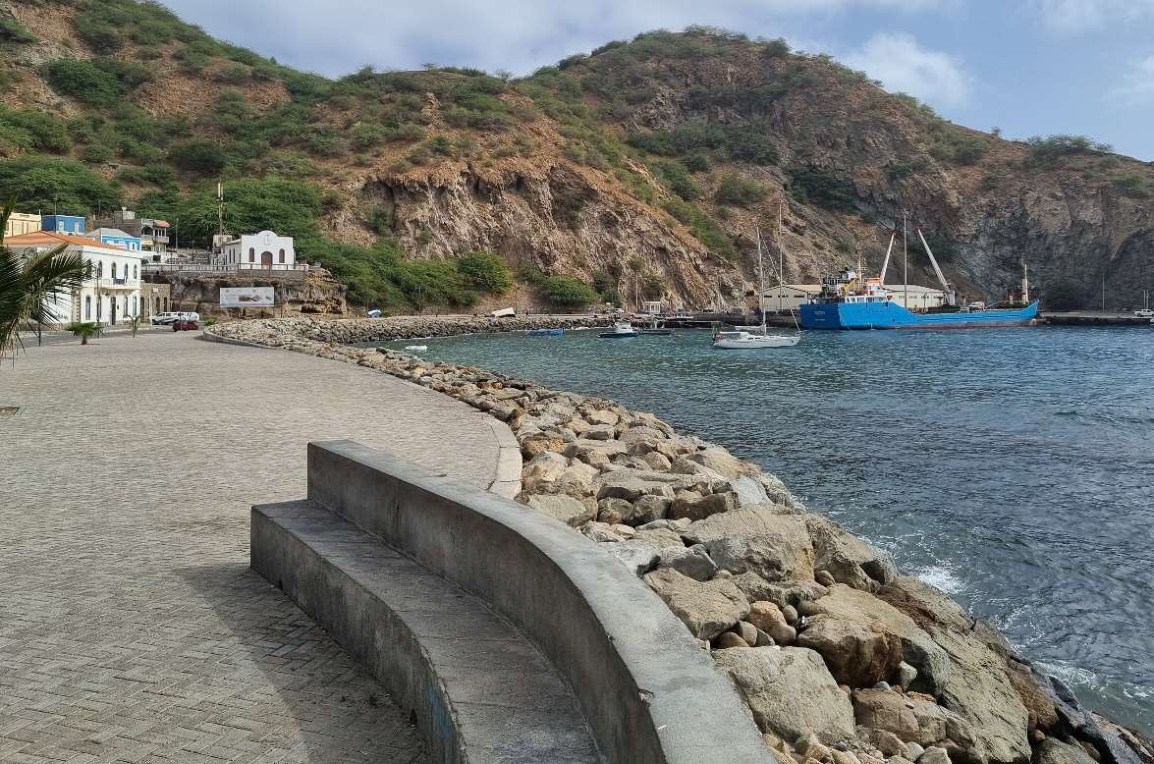
Slamat at anchor Porto da Furna, Brava
We were now at our furthest south and after a month sailing downwind there was a feeling that the party was over. I spent the afternoon preparing for upwind work, changing to the smaller No2 jib, lowering the boom gooseneck and stowing Slamat. The following day, after a prompt from the marine police, I checked in and out and took the aluga (taxi bus) up the mountain to Nova Sintra the main town on Brava. This is a pretty town, flowered with Portuguese architecture and a surprising number of shops and markets. I bought a few provisions and slowly walked the 7km road back to Furna.
Up early, and by 0700 I was hard on the wind in big seas. Tacking out of the channel with limited visibility was unnerving but in open water the winds moderated and Slamat felt good at 20 degree heal. I took note of leaks, rig tuning and other jobs that needed sorting before extended upwind sailing. The winds stayed constant overnight and by 0800 I had sight of the proposed anchorage in Sao Nicolau. Not being exactly where the guide suggested, I edged into protected water and dropped the hook feeling comfortable with a solid hold in windy conditions.
I spent the day at work, rebedding stantions, chain plates and some mastic on window seals etc. The following day would prove its worth.
Mindelo on Sao Vincente was my last stop, a 50nm reach. Setting off after breakfast and making good progress, by 1530 I was north of the canal de Sta Luzia, some 18 miles from Mindelo. Suddenly water erupted onto the lea of the mainsail. A sperm whale, surfacing just to leeward, had blown its stuff all over the sail. I was shaking with shock, there must have been 40 ft of the whale
still under Slamat as it slid away. Wow. Entering Mindelo in the evening light I anchored in a well- protected spot, 4 meters of water with a good set. What a day.
I spent a week in Marina Mindelo, fixing bits, provisioning and planning the trip back to Europe. I ate in lively restaurants, had good social and found the days passed swiftly. Soon it was time to pay bills, check out, have a final meal ashore and get going.
Over the preceding weeks I had studied the grib files and they were showing well. I needed to get north and after 5 days on starboard should find a shift to tack and be freed up over the last few days. Wind forecast NE5-6 with a day of F7, ETA of 0100 10 March
Leaving on Thursday 29 February I set out on port heading east. By early Friday I was on Starboard and in for the long tack. I should tack again on Wednesday or Thursday. All was well, and finally I felt disconnected from the world, at one with nature, the boat and myself. Days passed and life at sea took on its own pace; Meals, sleep, tending to Slamat. With such a small boat the gates on sail configuration are not big so the need to reef is ever present. Good daily runs were being recorded, 124, 120, 119, 128, 148; we were getting close to the tack point and Slamat was going well. We had fallen off some big old waves but she always picked up her heels and off we went again. However, I found life at 20 degree heal exhausting and had bruised a rib which was uncomfortable.
1100 Tuesday saw the clew of the no2 blown out. Quickly I doused the sail and replaced it with the no1. Still on starboard and ahead of schedule we had 50nm to our tack point. 1400 and calamity struck. A colossal crack and suddenly the foresail was swinging out to leeward. Without cognitive thought I clipped on and by the time I reached the shrouds I knew what I had to do and the order of action, immediately securing halyards forward. I had 2 reefs in and with only NE5 conditions were ok. It looked like the stem fitting had sheared off the bow with the sail, forestay and drum swinging wildly to leeward, shaking the fragile rig, knocking the cross trees and hitting the hull. I had to secure the sail, but the foil connectors had sheared so the top swivel could not come down. I just needed some luck and standing on the lifelines jigging the foils, while the sail whipped behind, I managed to get the swivel past the first joint; I had a chance. After half an hour I got the sail to a point where I could just reach to undo the top shackle then cut the bite in the halyard. Another halyard forward. With the sail below, I secured the foil and drum to the lifelines and retired for a cup of tea and a little think.
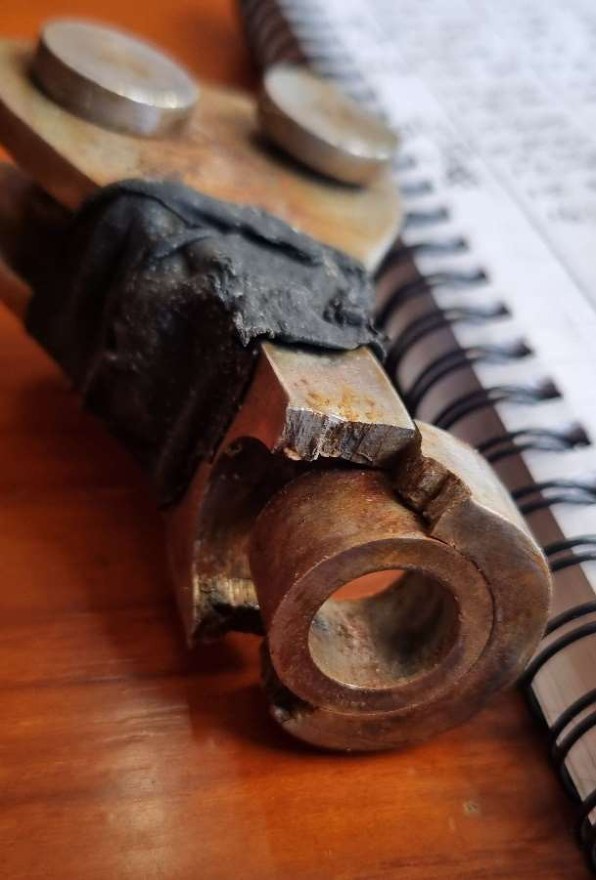
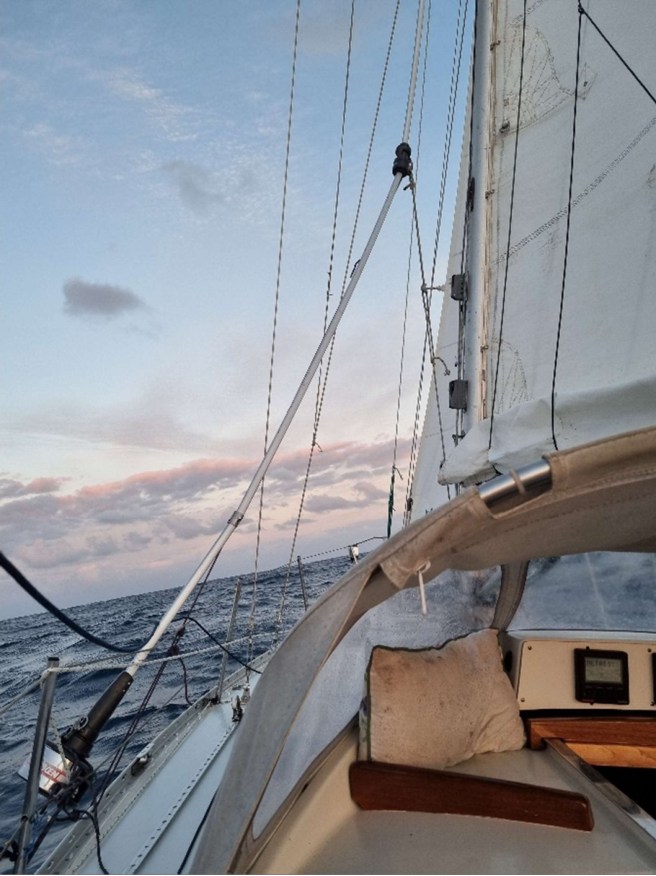
Not the right spot for a forestay The broken stem fitting
Wow, how had I not lost the rig? On inspection I saw that the baby stay blocks had exploded and the attaching shackle ripped through the fitting. I could only imagine that the braid on braid halyard secured next to the baby stay had taken the last of the whiplash, just saving it. I had been incredibly lucky, not only retaining the rig, but managing to get the sail down before further damage. Slamat was secure, now we needed some motion.
We were 450nm SW of Gran Canaria, a lonely bit of ocean, with no ships seen for days. On a whim I had thrown a no3 jib onto Slamat before leaving the UK. I hoped it was enough to provide motion without too much strain. Setting the sail on a dynema forestay we could make 70 degrees to wind, course 122 degrees at 3kts; we should get there. In addition, our diesel should give 300 miles in flat seas so there could be a time and place for that resource.
The following day, seeing the first merchant vessel, I made contact. Explaining my condition as secure but likely overdue, I asked him to report to Las Palmas port control as backup. I enquired of any significant weather. He mentioned 6-meter waves close to the Canaries on Friday. Not good. Realising the strongest forestay was still attached to the mast head, I planned how to attach it to the stem. I spent the day fashioning a new turnbuckle from shackles and an anchor swivel and, after a little persuasion, I secured the forestay secured and would it up. I couldn’t use the foils, but I had the rig as secure as possible for the big seas expected.
Slamat was making 70nm a day so eating it down. Friday came with no giant swell which was a relief. There was, however, a significant wind shift and by Friday afternoon we were making 080 degrees so better than east. On Saturday morning with some 250nm to go and easing winds it was time to motor sail. Pushing north the conditions eased further and by Sunday we found the wind
shadow of Gran Canaria. On Monday 12 March, 2245 we tied up alongside the fuel berth in Marina Las Palmas. Made it.
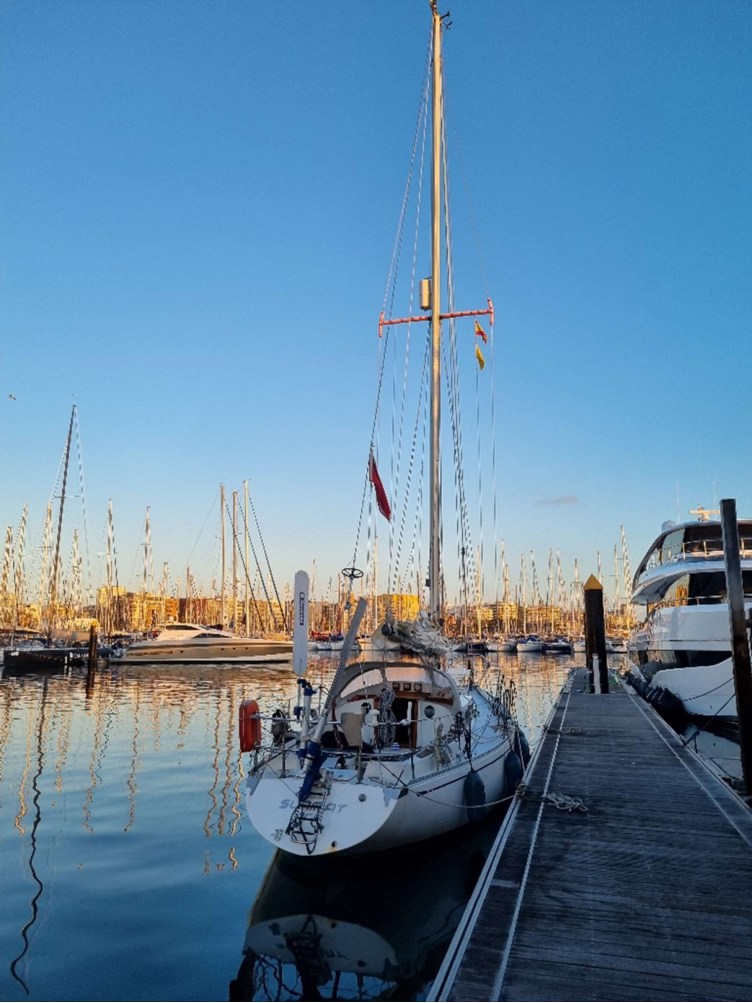
Slamat alongside Las Palmas Marina
We had sailed 2553 miles, been to Morocco, Western Sahara and the Cape Verde, seen incredible sea life and had the luck to survive major equipment failure. After organising repairs and tidying up, on Wednesday 14 March I was at the airport. Cabin crew doors to manual; what an adventure.